
Search Results for “{search_term_string}”

In Search of Peace On Common Ground
The New York Times

The Israeli and Palestinian teen-agers looked slightly dazed as they boarded buses at Kennedy International Airport, heading for Kent, Conn. They had just spent 12 hours on an airplane, jammed elbow-to-elbow in coach seats. Despite different allegiances, languages and religions, all shared the bond of growing up with terrorism, their daily lives shadowed by the threat of war.

For the first time since it started in 1993, Seeds of Peace, recipient of a 1997 UNESCO Peace Prize, has left its base camp in Otisfield, Me. to hold a two-week session in Connecticut. Last Sunday, 64 Arab and Israeli teen-agers, ages 14 to 17, arrived at Kenmont/Kenwood Camp to participate in the Partnership 2000 Summer Peace Camp.

Partnership 2000 links the region of Afula-Gilboa in Israel to nine Connecticut Jewish Federations. The Kent campers come from Afula-Gilboa, the Palestinian village of Jenin and the Jordanian town of Salt.

“These kids live less than 20 miles apart, but are separated by a chasm of mutual mistrust and fear,” said Rob Zwang, executive director of the Jewish Federation of Greater Waterbury and Northwestern Connecticut, which is sponsoring the camp.

John Wallach, the founder of Seeds of Peace and a resident of Washington Depot, is a former journalist and author of books on the Middle East. After the World Trade Center bombing in 1993, Mr. Wallach said he felt compelled to wage peace as vigorously as other people wage war.

“Seeds of Peace is a serious conflict-resolution program, not a sing-a-song, plant-a-tree-and-call-it-peace camp,” he said.

The camp provides an environment that helps kids see that the other side has a face.

“When you live together, you learn you have so much in common,” said Hilly Hirt, 16, an Israeli whose “best friend for life” is a Palestinian she met at her first Seeds of Peace session in 1996. “I don’t think of her as a Palestinian anymore,” Ms. Hirt said. “We are like sisters.”

Arabs and Israelis share bunk chores and tables in the dining hall, play fierce Frisbee games and compete in soccer, baseball and basketball as teammates. On a steep climbing wall, a Palestinian holds the rope for an Israeli and vice versa. They attend each other’s religious services, compose camp songs and whisper after lights-out. They might even short-sheet a bed or two. Camp life becomes the glue that, along with conflict resolution sessions, cements friendships.

Asel Asleh, 16, a Seeds of Peace graduate in 1997 from the Galilee, calls himself “an ex-Palestinian, currently an Arab Israeli.” Mr. Asleh described feeling like a stranger in his own land.

“My father was in political prison for five years and I have lost many friends,” he said, adding that it is an Arab Israeli’s duty to be involved, “to go out to riots, to talk, to argue.”

Still, Mr. Asleh said camp opened his eyes. “I see that person playing baseball against me. He is not an enemy. His people maybe did many mistakes, but he is my friend and that’s what is important.”

The Arab and Israeli delegations are chosen by their governments and composed of English-speaking teen-agers who often arrive with strongly held opinions. “It’s so much more important to turn kids like that around,” Mr. Wallach said. “These are extraordinary young people, tomorrow’s leaders. I tell them, I don’t care what you think, but I want the ideas to be your own. I want you to listen to the other side and realize they are human beings, too.”

David Sermer, 14, of Watertown is one of 10 Connecticut teen-agers chosen to be a host-delegate. “I’m ready to listen to both sides,” he said.

“The job of the Americans is to be neutral, a buffer, which is what the United States is supposed to be in foreign policy,” said the camp director, Timothy Wilson, who was once a school teacher and football coach. Mr. Wilson’s ethnically diverse team of counselors leads campers step-by-step through confrontation and the sharing of pain to empathy, reconciliation and friendship.

At camp, Arab sleeps next to Israeli, a reality that makes the first night difficult. Heba Kwaik, a 15 year-old Palestinian from Gaza, said she was petrified. “I didn’t realize Israeli girls would be sleeping in the same room. I was sure I’d be dead in the morning.”

Dr. Stanley Walzer, 70, the camp psychiatrist and the campers’ unofficial grandfather, said, “The kids arrive frightened, many of them very homesick.”

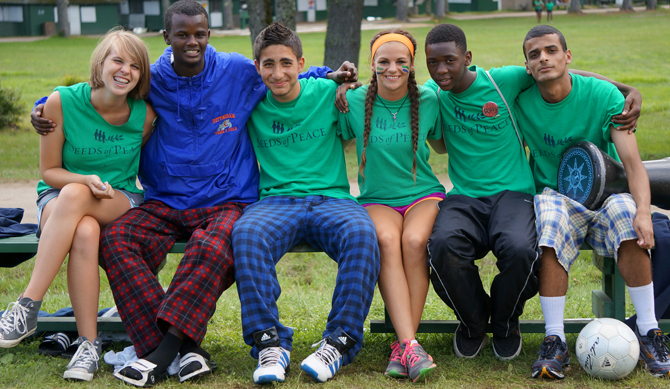
Campers gradually relax in an environment sensitive to individual and cultural needs. Meals are kosher. Everyone wears the Seeds of Peace green T-shirt with its olive branch logo. The religious, either Muslim or Jewish, might choose a long-sleeved shirt and jeans instead of shorts. Some Muslim girls wear head coverings, religious Jewish boys the yarmulke. “Most kids wear the same stuff Americans do,” Mr. Wilson said, “the drop-down pants, the caps turned sideways.”

Although romance at the camp is forbidden, hugs are encouraged as confirmation of friendship. Whenever campers hear that an Arab or Israeli is killed as a result of the Middle East conflict, campers and staff share a minute of silence.

“There are tears, but they are perhaps the most hopeful sign of all,” Mr. Wallach said. “To be unafraid to cry in front of each other, to be so vulnerable and so human, that’s ultimately what draws them together.”

Carole Naggar, an Egyptian Jew and artist-in-residence for the Kent session, pointed to a stack of Middle Eastern newspapers brought from home by the campers at her request. “We’re going to grind all the negative headlines into a pulp,” she said. “The kids are going to destroy all the bad images: the Palestinians throwing stones, the Israelis shooting Arabs and make clean, new paper.”

The campers use the pulp to make the new paper and a very long scroll is emerging day by day. By next Saturday, the end of the session, every camper will have contributed a drawing, poem, photograph from home, handprint or other artifact. The finished scroll will be displayed at the new year-round Seeds of Peace center in East Jerusalem, which opens this September in a building chosen because it straddles the old border between Arab and Jewish sectors.

“We’re excited to finally have a place to offer a year-round program,” Mr. Wallach said. “It’s been very challenging to help more than 1,000 kids maintain camp friendships back home where visiting is difficult, even dangerous. And, of course, we are trying to reach as many other children as possible.”

An interactive compact computer disk called “Teaching Peace” replicates the Seeds of Peace conflict resolution process and will soon be introduced into Israeli, Palestinian and Jordanian school curriculums, Mr. Wallach said.

Through good times and bad, Mr. Asleh keeps in touch with almost 300 Seeds of Peace friends through E-mail. “What we are doing at camp, it changes you so deep,” he said. “To believe that maybe we can make a difference is like music to my spirit and food to my mind.”

Correction: September 12, 1999, Sunday Because of an editing error, an article on Aug. 29 about the Seeds of Peace camp in Kent for Israeli and Palestinian teen-agers described the food incorrectly. Kosher meals are available at the camp, but only on request.
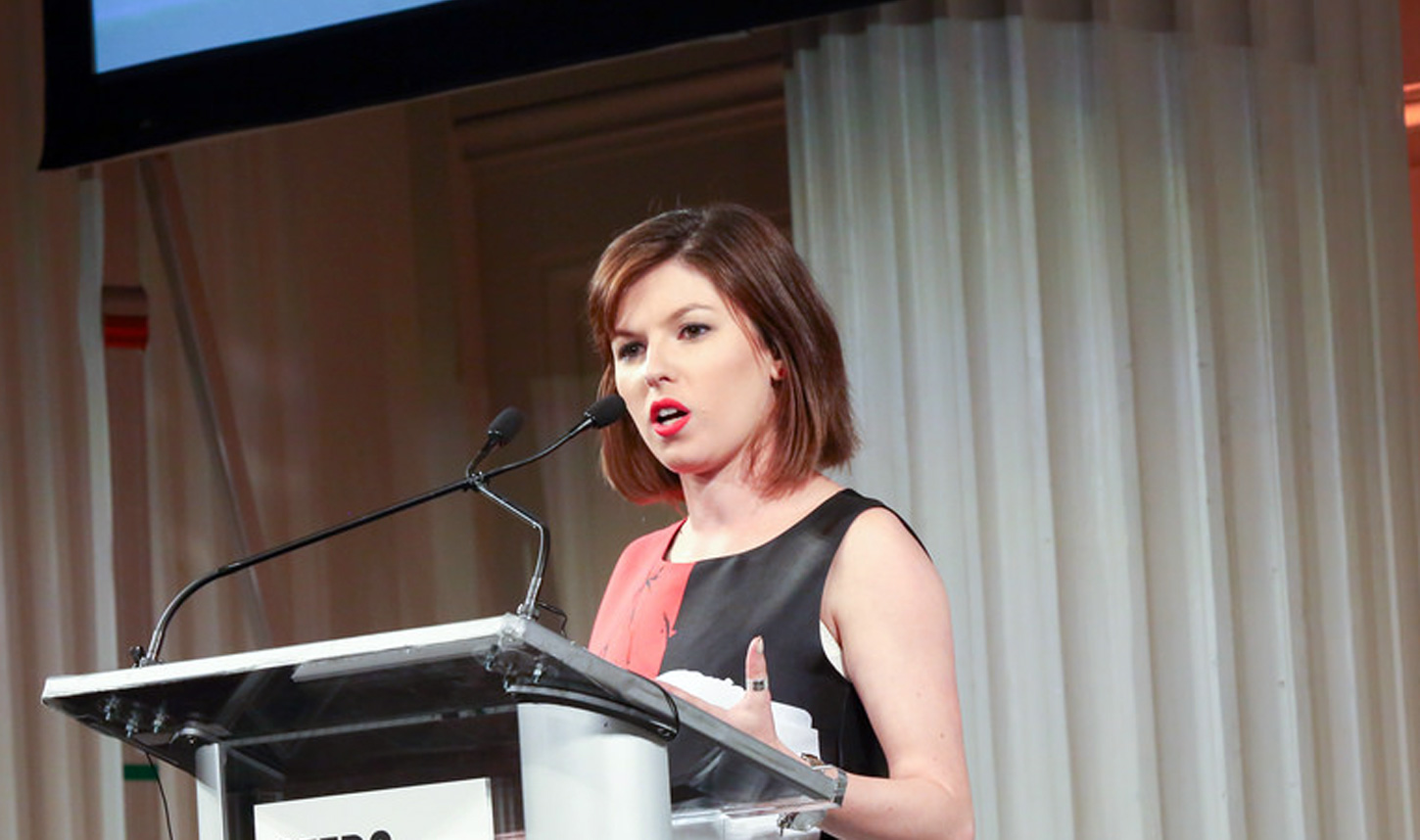
Read Leslie Chess Feller’s article in The New York Times »

Alumni Profile: Alina
Paving the way for women in the security sector

Our alumni are working in ways small and large to make an impact in their communities. This “Alumni Profiles” blog series will feature some of our over 7,000 changemakers in 27 countries around the world who are working to transform conflict.

At Seeds of Peace, we equip leaders with the skills and relationships needed to accelerate the social, economic, and political changes essential for peace.

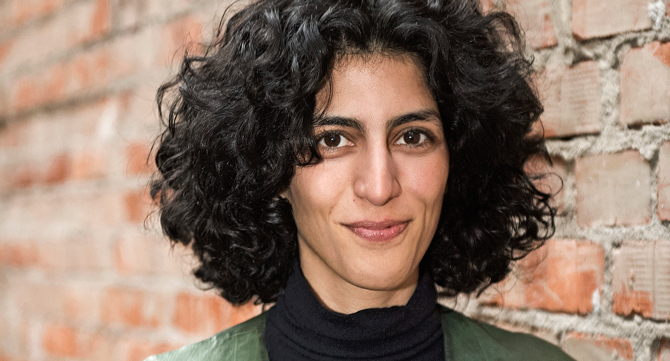
Seeds of Peace’s 2016 GATHER Fellow Alina is a perfect example. Ms. Catt, the organization she developed as part of her GATHER cohort, works to accelerate gender equality in the field of international security. In honor of Ms. Catt’s launch, we spoke with Alina about the new organization, as well as the change she hopes to bring to her community.

Seeds of Peace: Can you tell us about Ms. Catt and how you’re working to close the gender gap in international security?

Alina: Ms. Catt [named for the American suffragette Carrie Chapman Catt] aims to ​strengthen the security leadership pipeline by empowering current and future female leaders in realms of international security (e.g. public policy, strategy and economics). If we want see leadership excel, we must fully incorporate women into all global security efforts—as was recommended in UN Security Council Resolution 1325 back in October, 2000. Ms. Catt implements this resolution in non-Western conflict countries.

Seeds of Peace: Inclusive Security’s 2015 study found that when women are included in peace processes, the agreement made is 20 percent likelier to last at least two years and 35 percent likelier to last at least 15 years. Why do you think that is?

Alina: For one, research shows that women tend to seek long-term, stable gains over short-term gains. For example, the Nobel Laureate Dr. Muhammad Yunus observed in his micro-lending ventures in Bangladesh that women used small loans to invest in livestock or plants, which could then provide food or a steady source of income, while men often used their funds on luxuries or snacks. The family/community-first approach adopted by women is more likely to create peace (long-term stability) over war (short-term gains).

Secondly, incorporating women and gender perspectives into male-dominated fields brings in new and innovative perspectives to the challenges at hand, allowing for a stronger pipeline—from research to policy, theoretical frameworks to implementation, negotiations to agreements.

And finally, women have more to lose in war, as shown in research conducted by the United Nations: “Women and girls suffered disproportionately during and after war, as existing inequalities were magnified, and social networks broke down, making them more vulnerable to sexual violence and exploitation.”

Seeds of Peace: What advice do you have for women who are looking to become leaders in male-dominated fields or societies?

Alina: I believe that women must adopt two simultaneous strategies: focusing on oneself and focusing on the currently male-dominated environment.

Madeleine Albright once said, “there’s plenty of room in the world for mediocre men, but there is no room for mediocre women.” If we want to sit at the negotiation table, we must strive to be the best and the brightest while proactively leaning In. While we do so, we must not forget to help our fellow female colleagues be their best, allowing us to leverage our collective power.

Simultaneously, we should strive to create mutually beneficial, interdependent relationships with the men in our field, as equals. While women have a lot to gain, men seem to think they are only losing. However, this is not what the data shows us.

Seeds of Peace: Can you expand on that?

For one, a McKinsey Global Institute report from 2015 found that women’s equality in the workforce can add $12 trillion to global growth. Furthermore, as the Inclusive Security research showcases, peace agreements last longer when women are included in the peace processes.

These mutual benefits for men and women are why Ms. Catt focuses on fully incorporating women and gender perspectives into all global security efforts, especially in conflict countries in the global south. Carrie Chapman Catt once said, “In the adjustment of the new order of things, we women demand an equal voice; we shall accept nothing less.” I believe it’s not only we, women, but also men who demand nothing less than an equal voice for women.

VIDEO: A New Generation of Leadership ‘In Practice, In the Present, Like Right Now’

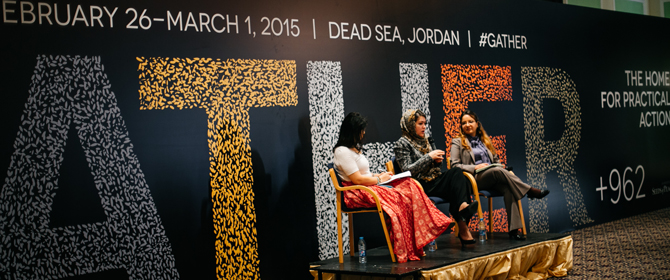
In February of 2015, over 200 changemakers from 20 countries around the world met in Jordan for GATHER+962 to take practical steps towards transforming conflict in and between their communities.

GATHER, a Seeds of Peace initiative, marked a new milestone in Seeds of Peace’s journey as a leadership development organization. Matt Courey, Vice President of the Seeds of Peace Board of Directors, shared why this matters at the opening of the inaugural event.

“The world has changed since Seeds of Peace was founded in 1993. In some ways the paths to change seemed clearer then. We said things like, “Treaties are signed by governments, Peace is made by people.” We didn’t spend much time thinking about if treaties are NOT signed by governments. Well—now we have to. For better and for worse, non-state actors are taking the initiative all over the world to affect the change they want to see. Now it’s our turn to thoughtfully and strategically create the change that we want to see.

“Drawing on lessons from conflict transformation in places like Northern Ireland, South Africa or even going back to the Civil Rights Movement in the US, we are building the infrastructure for change out of a much broader array of career choices—journalists and businessmen, artists and educators, women leaders and entrepreneurs—equipping all relevant actors to accelerate the social, political and economic change necessary for peace to take root.

“Seeds of Peace was founded with the goal of empowering new generations of leadership. Well guess what? Here we are, one generation later, demonstrating a belief in professional aged changemakers to be that new generation of leadership—in practice, in the present, like right now.”

Watch video of Matt’s opening remarks.


GATHER+962 opening Remarks delivered by Matt Courey

My name is Matt Courey. I am a Managing Director at Credit Suisse, a Swiss bank, where I run a bond trading desk. In 2002, I met Bobbie Gottschalk, co-founder of Seeds, and I asked the question you are all thinking: What in the world could a bond trader possibly do with an organization like Seeds? The answer would follow. I started with the Young Leadership Committee in New York. I helped found Seeds of Peace UK in London. I quit my job to work as a Camp counselor. And I traveled to the region to see our programs and visit our amazing graduates.

My Story

So here’s my story: I’m the grandson of immigrants from Syria and Lebanon. I grew up in the US during the awful Lebanese Civil War, and struggled to create a life and a career that had meaning for me as a Lebanese American. In my travels to over 90 countries, in my day-to-day work with colleagues and clients, and of course with my circle of family and friends, Seeds of Peace has shaped how I engage other people, how I listen and value what people share with me as a gift to be absorbed and processed, slowly but surely building my own sense of purpose.

Over the last five years, I’ve served on the Seeds of Peace board, which has grown dramatically and diversified. I have personally experienced the incredible evolution of our organization and our community—bottom to top—culminating here with our flagship graduate program, GATHER.

Seeds of Peace GATHER Initiative

I want to acknowledge the difficult choice that many of us made to come here today. It was likely unpopular. And the logistics of physically moving yourself from your homes to get here was probably difficult and even dangerous. So take a look around: from Palestine and Israel, from Egypt and Jordan, from Cyprus and the Balkans, from Pakistan and India, from the US to Afghanistan—all of us are coming from realities that are violent and oppressive in one way or another.

So with a solemn appreciation of the realities that we all overcame to get here and a reiteration of our common conviction that we refuse to accept those realities, I want to warmly welcome each and every one of you to GATHER.

From the beginning, Seeds has meant a lot of things: bringing people together, communicating to break down barriers, reflecting on and affirming identity, building and sharing dreams.

The world has changed since our founding in 1993. Back then, there seemed to be clearer paths to creating change—we would hope for a couple of our graduates to end up as president or prime minister of their country. We said things like “Treaties are signed by governments, Peace is made by people.” We didn’t spend much time thinking about if treaties are NOT signed by governments. Well—now we have to. For better and for worse, non-state actors are taking the initiative all over the world to affect the change they want to see. Now it’s our turn to thoughtfully and strategically create the change that we want to see.

GATHER 962 Afghan Discussion

So while we re-worked our language and broadened our goals, at our core we are still the same Seeds of Peace: bring people together, talking and respecting, sharing a vision of a world where we don’t have to accept what is, when we know what can be.

Drawing on lessons from conflict transformation in places like Northern Ireland, South Africa, and even going back to the Civil Rights Movement in the US, we are building the infrastructure for change out of a much broader array of career choices—businessmen and journalists, artists and educators, women leaders and entrepreneurs—equipping all relevant actors to accelerate the social, political, and economic change that is necessary for peace to take root.

So while we’ve re-worked our language and broadened our goals, at the core we are still the same Seeds of Peace: bring people together, talking and respecting, sharing a vision of a world where we don’t have to accept what is, when we know what can be.

Let’s be Tough on Ideas and Gentle on People

So let’s use these next few days to connect people, ideas, and resources. We want to balance the need for rigorously-researched ideas with our fundamental value of respect. So let’s be tough on ideas and gentle on people.

Speaking of people, let’s talk about who’s here. So the community we’ve assembled includes Seeds of Peace graduates, other emerging leaders from the Middle East and South Asia, and established leaders in philanthropy and finance, diplomacy and technology, and media.

Thanks to the recent growth of our board, thanks to the creation of the Global Leadership Council, thanks to our record as the oldest and largest program of our kind, and thank to our hard-earned reputation for political neutrality, we are uniquely set up to attract this caliber of human capital to support our growing community of changemakers.

Let’s Disrupt the Status Quo

Part of our mission is to disrupt the status quo, and that is a concept and a task that exists on lots of different levels, but I want you to reflect on three. First, at the basic level of individual choice: disrupting your own status quo. Learning and unlearning, allocating your time and resources to your initiative, even your choice to be here today.

Second, at the opposite end of the spectrum, disrupting the status quo in broadest sense. Re-imagining a better world—what does that mean for you? Equal opportunity for economic empowerment, gender equality, care for the environment, an end to violence in all its forms, a media which educates and empowers as much as it entertains—whatever your vision is for your initiative, embrace as a key part of the process: imagination as disrupting the status quo. JK Rowling (the author of my favorite books, the Harry Potter series) once said: “We do not need magic to change the world, we carry all the power we need inside ourselves already: we have the power to imagine better.”

Re-imagining a better world—what does that mean for you?

Third—somewhere between the individual commitment to change on a small scale, and imagining a better society on a large scale, disrupting the status quo means something in the middle: coming together in groups, small and large, to leverage and learn from each other’s ideas and experiences, each other’s careers and talents, each other’s resources and time. That is why we are here. Individual and collective action, inspiration and impact.

GATHER 962 Ashoka

A New Strategic Direction

Seeds of Peace was founded with the goal of empowering new generations of leadership. Well guess what? Here we are, one generation later, demonstrating a belief in professional aged changemakers to be that new generation of leadership—in practice, in the present, like right now.

This is not a one off initiative but part of a new strategic direction, in line with the age of our graduates and the evolving social and political terrain in the regions in which we operate. In June of this year, for example, we’ll be running a Gather Leadership Incubator in London, to support some of the initiatives that develop here this weekend.

Here we are, one generation later, demonstrating a belief in professional aged changemakers to be that new generation of leadership—in practice, in the present, like right now.

As with all things Seeds of Peace, much of the potential of Gather rests in the days afterwards, in the ways you take it home—leveraging this network to improving on an idea, working with someone you meet here to turn an idea into action, or simply participating in the larger support system of the Gather community by helping others in function or in morale. It all counts. And it starts with you.

A Turning Point

As a final thought, 50 years ago this month, US president Lyndon B Johnson finally took the offensive in the fight for civil rights for African Americans with an unprecedented speech to congress demanding the passage of the Civil Rights Act. Thanks to a mosaic of coordinated efforts from the likes of Martin Luther King and his Southern Christian Leadership Conference, to Rosa Parks and the Women’s Political Council, to the Freedom Riders and unnamed white and black business owners who worked together to minimize violence, it was a ten year acceleration of individual and collective action, inspiration and impact that led to Johnson’s momentous speech. He opened by saying this: “At times, history and fate meet at a single time in a single place to shape a turning point in man’s unending search.”

For him it was the search for equal rights for African-Americans. For you it could be the search for many different things. The hashtags you submitted when you applied to Gather included: #OneLaptopPerChild #responsiblerefugeereporting #EnoughWithBiasedHistory #Educategirls

When I think about the 22 years of growth at Seeds of Peace, when I think of the thankless job our staff has done in managing the logistics of this conference, when I think of the choices all 200 of you have made to be here, I get pumped for the new few days. History and fate have indeed brought us here because we refuse to accept what is, when we know what can be.

I want to warmly welcome each and every one of you to GATHER.

Learn more about GATHER ››
Read a Christian Science Monitor article about GATHER ››

Seed Stories: Searching for humanity and dignity

Monday night flight from Ben-Gurion Airport in Tel Aviv, to London where I now live.

I reach the top floor of Terminal 1. The first security officer looks at my passport and asks me to follow him and head to the line on the far right. We’ve been through this before, I know the way.

When we get there, the second security officer tries to guess what’s in my bag. Dates? Ma’amoul? I smile and say baklawa. She tells her colleagues I have baklawa. “Did you guess?” someone asks. “No, I talked to her,” she admits. From their chuckles I think this is a game they play to pass the time.

Second security officer says into her radio, “I have a ‘Mikey.’” I’m the Mikey. She asks me to put all my belongings into baskets and follow her. She needs to search my body.

Why? She doesn’t bother answering. She just says to sit down and take off my shoes. I ask if she needs me to take off my socks, too. No. Then she directs me to a small curtained space where she plans to search my body.

Me: “What about the big x-ray machine with all the radiation?” I prefer that to being felt up by a stranger.

Her: “It’s not possible at this time. You keep asking ‘Why?’ There’s no point, I just do what I’m told.”

Me: “Why was I moved to a different line?” As if I don’t already know.

Her: “I don’t know.”

When she asks me to unbutton my jeans, I unzip them and pull them down.

Me: “Is this good enough?” This doesn’t go over well.

Her: “Just the button.”

Me: “Why?”

Her: “Take off your shirt.”

I do and tell her I’m wearing another shirt underneath. “Want me take that off, too?”

Her: *hesitating* “Yes.”

She informs me she’s going to touch me with a metal detector and gestures at her breasts.

Me: “You mean you’re going to touch my breasts?”

Her: “Not with my hands.”

She runs the metal detector over my chest and says, “Good, no wires.” She’s referring to my bra.

Me: “Yes, aren’t wireless bras more comfortable?”

Her: “That’s right, me too,” and runs the metal detector over her own chest. “Turn around so I can check your hair.”

As she runs her gloved fingers through my hair and over my scalp I make a joke about not having worn enough deodorant today.

Her: “Don’t worry, you smell nice.”

She calls in her walkie-talkie for a ‘mefasek’ because she needs ‘havshala’. Mefasek means circuit-breaker; havshala means ripening.

Me: “What’s a mefasek?”

Her: “It’s a person’s job. Don’t worry, while we’re in here they’ll finish searching your belongings.” As if this is meant to reassure me.

Me: “Can you make sure they don’t eat my baklawa?”

Her: *laughs* “Has ve halila, I’m watching them.”

Me: “Do you like your job?”

Her: “Sure.”

She asks where I bought my baklawa. I answer, even though the line between small talk and interrogation is unclear. She asks where I’m from. I answer. She says her parents live nearby. I ask where. She answers. I say that’s very close to where I bought the baklawa. I ask if she lives with her parents. She says she doesn’t. I ask where she is from. She answers and tells me she recently moved house. She asks if London is fun.

Even though she won’t allow me to button up my jeans, she has allowed me to put on one of my shirts. We’re practically best friends.

Finally, her colleague, the Mefasek presumably, arrives. She introduces herself as Marva, Head of Security. She wants me to unzip my jeans and pull them down to my knees. Why? Because the metal detector was activated—probably by the metal button on my jeans. And even though her colleague has already seen my underwear and thighs, she needs to have a look for herself. I pull down my jeans as far as they’ll go.

Me: “Good enough? Need me to turn around?” I start to turn around.

“No!” they both protest. Because clearly asking me to turn around would be too much.

Me: “Are you sure?”

Marva the Mefasek: “Yes.”

Me: “Do you like your job Marva?”

Marva the Mefasek: “Yes, I believe in it,” she says with conviction.

I smile. Not sure what it is she believes in so strongly, my crotch posing a threat to passenger security or my baklawa and belongings needing to be searched in my absence. But I keep quiet. I’ve run out of things to say and I have a flight to catch. Marva the Mefasek apologises for any discomfort. I say “I’m comfortable if you are.” My new best friend offers to help me pack my stuff and wishes me a good flight. I say goodbye without making eye contact and head to the gate.

I wrote the above in anger to post on my Facebook page. It is not something I particularly enjoy sharing on social media—it is a private moment made public by an oppressive political reality and I tend to be cautious about what I share these days. It is also not an uncommon occurrence. Almost every Arab or Palestinian passing through Ben Gurion Airport is aware of the term “Mikey.” Every time I walk into Ben Gurion I feel anxious and prepare myself for what I know is coming. I also know there is far worse injustice in the world today. Ultimately, I consider myself lucky because I have always been allowed to board the plane. Not everyone is so lucky.

My way of coping is by appealing to the security officers’ humanity. The lesson I learned through Seeds of Peace is that we are all human. Finding common ground— lack of wire under our breasts and our parents being neighbours—made the experience more bearable for me, and hopefully reminded her that I am a person who deserves to be treated with dignity.

While this story is not unique, sharing it with my friends and receiving messages of support—many from Seeds—is unique and powerful.

I’ll leave you with one from my close friend Karen Golub: “I’m sorry that you’re not treated with the same dignity I am when we go through the same airport. I’m sorry we are not equal under our government. To me, home is not home without you.”

Janet Wallach named next Seeds of Peace president

NEW YORK | On the night of its unique and spectacular Young Leadership Committee fundraising event in New York, Seeds of Peace officially announced that Janet Wallach, the widow of Seeds of Peace founder the late John Wallach, will take over as President of the international nonprofit organization.

“Seeds of Peace has been an important part of my life since my husband, John, created it in 1993.  Under his direction as well as that of past president, Aaron Miller, I have been honored to remain integrally involved in the organization’s growth—helping it to become one of the most internationally recognized institutions working for peace in the Middle East and other conflict regions,” said Janet Wallach. “I look forward to contributing to Seeds of Peace in a more official capacity as Seeds of Peace expands in its second decade; with over 3,000 graduates—many of whom are now young adults trained and positioned to become leaders, Seeds of Peace is needed more than ever.”

During the three years Mr. Miller served as President of Seeds of Peace, Janet Wallach remained in the New York office as Executive Vice President. Miller, who transitioned to the role of Senior Advisor, is currently at the Woodrow Wilson International Center for Scholars working on his new book “America and the Much Too Promised Land: The Elusive Search for Arab-Israeli Peace” (Bantam/Dell, 2008). After an extensive executive search, Seeds of Peace chose Wallach as the natural successor to Miller.

Janet Wallach is a journalist and the author of eight books—writing extensively about the Middle East. Her most well-known book, “Desert Queen; The Extraordinary Life of Gertrude Bell” (Nan A. Talese/Doubleday, 1996), has been translated into twelve languages and was praised by The Boston Globe for being “as timely as today’s headlines.” “Wallach comfortably commands the political and diplomatic history of the Middle East,” said the Chicago Tribune.

Janet Wallach has spent much of her life living and working in the Middle East, and has also co-authored “Arafat: In the Eyes of the Beholder” (Carol Publishing, 1991, updated 1997); “The New Palestinians” (Prima, 1992), and “Still Small Voices” (Harcourt Brace Jovanovich, 1988).  Her most recent book, “Seraglio” (Nan A. Talese/Doubleday, 2003) is an historical novel that was called “both serious and enchanting” by Publisher’s Weekly.  Janet Wallach has been a frequent contributor to The Washington Post Magazine as well as a contributor to Smithsonian Magazine and other periodicals. She has written cover story profiles of Iraqi Ambassador Nizar Hamdoon; Her Majesty Queen Noor of Jordan; Reza Pahlavi, putative heir to the throne of Iran; Palestinian envoy Hassan Abdul Rahman; Saudi entrepreneur Adnan Khashoggi; First Lady of Egypt Jihan Sadat; and the British official Gertrude Bell.

The official announcement of Janet Wallach as President took place at the Seeds of Peace fundraiser A Journey Through the Peace Market on Thursday, February 16th.  This star-studded fundraiser featured “Best New Artist” and 3-time Grammy winner, John Legend as well as 40 Israeli, Palestinian, Indian, Pakistani and Afghan Seeds of Peace program graduates.

With recent events and leadership transitions in the Middle East, Seeds of Peace has recently been highlighted as a critical organization to the Middle East and the Israeli-Palestinian conflict because it is investing in a new generation of leaders who are capable of understanding and reaching out to the “enemy.” Former President Bill Clinton spoke to this at the World Economic Forum in Davos just weeks ago when he praised the work of Seeds of Peace and discussed the importance of finding ways to help people understand the other side.

Seeds of Peace is dedicated to empowering young people from regions of conflict with the leadership skills required to advance reconciliation and coexistence.  Since 1993, it has graduated over 3,000 teenagers from its internationally-recognized program that begins at its Camp in Maine and continues through its Center for Coexistence in Jerusalem. More information can be found at www.seedsofpeace.org.

Ned Lazarus Diary No. 3
Slate

“Don’t you have any better music?” Ten different things about that sentence caused me to do a double take. The unmistakably American accent. The unmistakably female voice. The completely comfortable English. The apparent distaste for the standard Arabic Top 40 cassette that usually thrills Palestinian kids, and the subsequent conclusions that this girl was passionate about music and about some different kind of music than her peers. The lack of “Sir,” “Mister,” or “Excuse me, teacher,” anywhere in the sentence. The direct, almost obnoxious tone. The simple fact that this mysterious young Gazan female had the confidence to ask this question at all, a brazen act with a total stranger. When I turned around to see who it was, I multiplied my double take. She had a bright face wrapped in a colorful scarf, and she was the first hijab girl to smash my stereotypes, and later, tragically, to break my heart.

It was midnight, the day before camp, June 1998. The 15 Gazan members of the new Palestinian delegation and I were cruising to Israel’s Ben Gurion airport in the modern ship of the desert, the Ford Transit van. We had successfully navigated the barbed-wire labyrinth that is the Erez border crossing from Gaza to Israel, in a record-fast time of just over two hours. Each Palestinian kid had already presented his ID to three different Israeli soldiers and turned his bags over for a thorough search; three more ID checks and one more exhaustive search awaited them at the airport. But this was routine. That sentence out of the back of the van came out of nowhere—certainly didn’t sound like it came out of Gaza.

Gaza was, back then, the most thoroughly sealed off section of the Palestinian Authority. Unlike the West Bank, which in the peace process days was only occasionally roadblocked in every direction, no one entered or left Gaza without an Israeli-issued permit, which was difficult for most and impossible for many to obtain. Gaza was consequently the poorest part of Palestine, the most religiously conservative, and the least likely to produce such a sentence.

I had grown accustomed on camp flight night to meeting Gazan Seeds who were especially excited about their upcoming trip to America, it often being their first time out of Gaza—but who were also shy and fastidiously respectful of their strange, over-friendly American escort. Until they got used to over-friendly Americans after a few days at camp, the girls often barely spoke to me at all. But this girl, wrapped in the symbol of Islamic piety—that despite my relatively extensive experience with Palestinians, clearly triggered a lot of assumptions in my mind—wasn’t just talking, she was initiating conversation, and she was pissed off I hadn’t brought anything from Pearl Jam.

She didn’t initiate conversations just with me; she was a smash hit at camp, a crack hitter on the softball field, a powerful Palestinian voice in the coexistence discussions, and especially popular with those Israeli girls who were fellow devotees of Buffy the Vampire Slayer. She’s not your typical hijab girl—but she’s not alone. Several more such Seeds followed in her footsteps, leaving me and their Israeli acquaintances with eyes and minds more wide open. Alas, in the eyes of her parents, the original dazzling hijab Seed had indeed gone a little too far on her trip to America. Her parents discouraged and eventually disallowed all contact with Seeds of Peace and Israeli friends.

But next summer two new hijab girls with no previous American experience came and smashed stereotypes by simple force of personality. One of those is our famous fugitive from yesterday—we’ll call her Salma. She’s from the closest to Gaza you can get in the West Bank, a traditional Muslim family in a rural hamlet between Nablus and Jenin. She speaks remarkable English for someone from her area, the best in her school with no competition. She was the leading Palestinian girl in the third camp session of 1999, returning home proud of representing her people and having won the hearts and respect of many Israeli teens. Unlike our Gazan original, Salma didn’t break my heart either upon coming back.

Salma stayed in close touch and remained as active as she possibly could, even during the intifada when Israeli soldiers and settlers have repeatedly shot up and shut down her village, often cutting off electricity and water and imposing curfews. She described the events and her continued hope for peace in the Olive Branch, and appreciated the concerned phone call she received from an Israeli Seed, consciously distinguishing between her friend and the soldiers that afflict her and her family.

Salma is a fugitive because, as a West Bank Palestinian, she is not legally permitted in Jerusalem. But she has to take the TOEFL here, in order to apply to university in the United States. Her abilities and her aspirations are greater than what’s available to her at home, and we want to help Salma get where she could easily go if a million obstacles weren’t in her way.

Even to get the point where we could help her, she literally had to climb mountains. The Israeli army has encircled and separated all the Palestinian cities in the West Bank throughout most of this year, more tightly than ever after the assassination by Palestinians of an Israeli minister three weeks ago. Salma hiked one and a half hours over the mountains surrounding Nablus and crossed five checkpoints in three different taxis before we picked her up. Her car was the last one to pass between Nablus and Ramallah before a firefight on that road killed one Israeli soldier and three Palestinian gunmen and closed the road once again to any Palestinian transportation.

So, my moral of today’s story: It takes endurance, chutzpah, courage, cleverness, good luck, and the intervention of a major international organization for ordinary Palestinians to travel pretty much anywhere right now, and before the intifada it wasn’t that much better. For those who have concluded that I am radically pro-Palestinian, I’m just telling the story of one girl’s trip to take a test. And tomorrow, we’ll meet the Israeli teen from a settlement who declared in the most permanent possible way that she’s a Seed of Peace.

Read Ned Lazarus’ diary entry No. 3 at Slate »

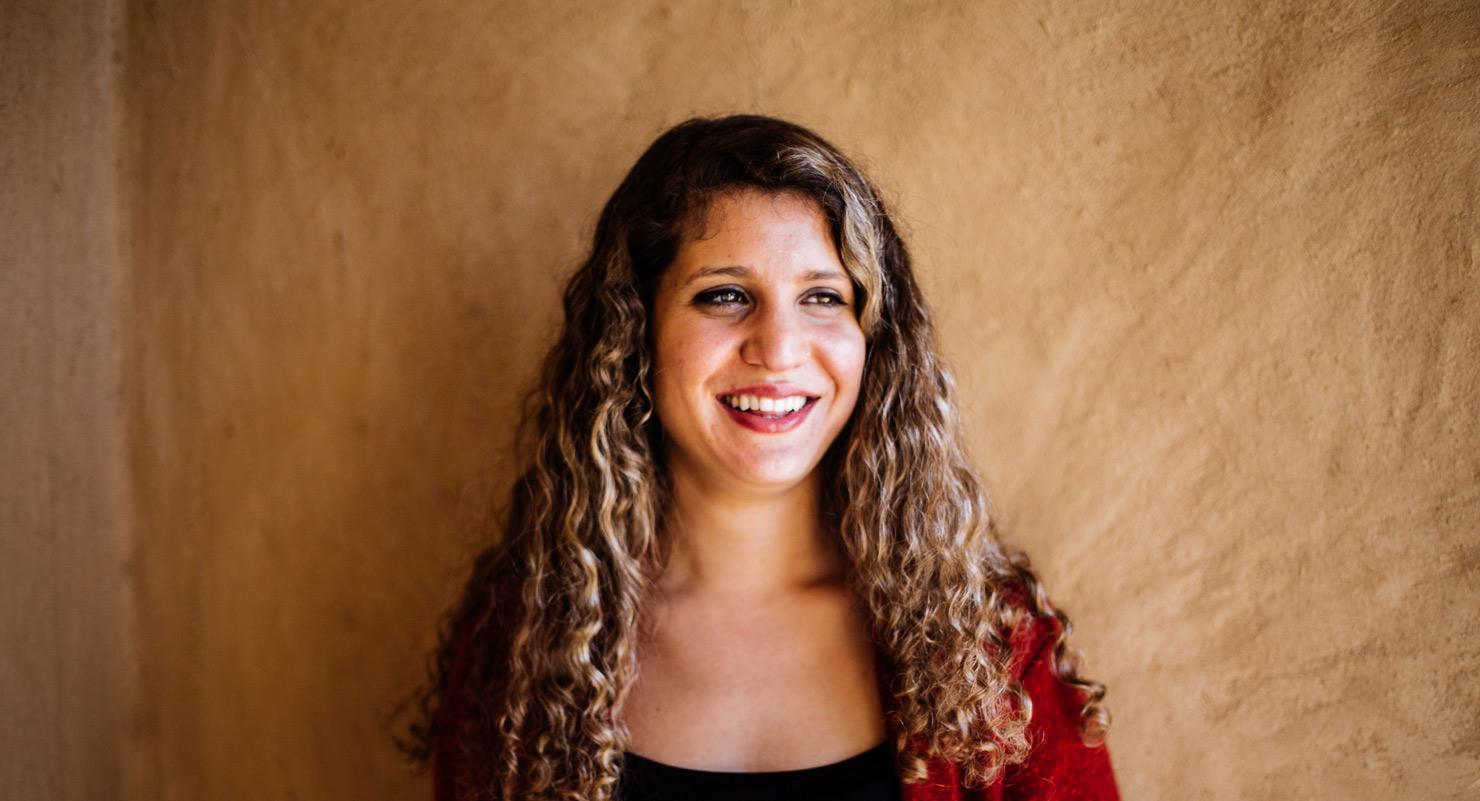
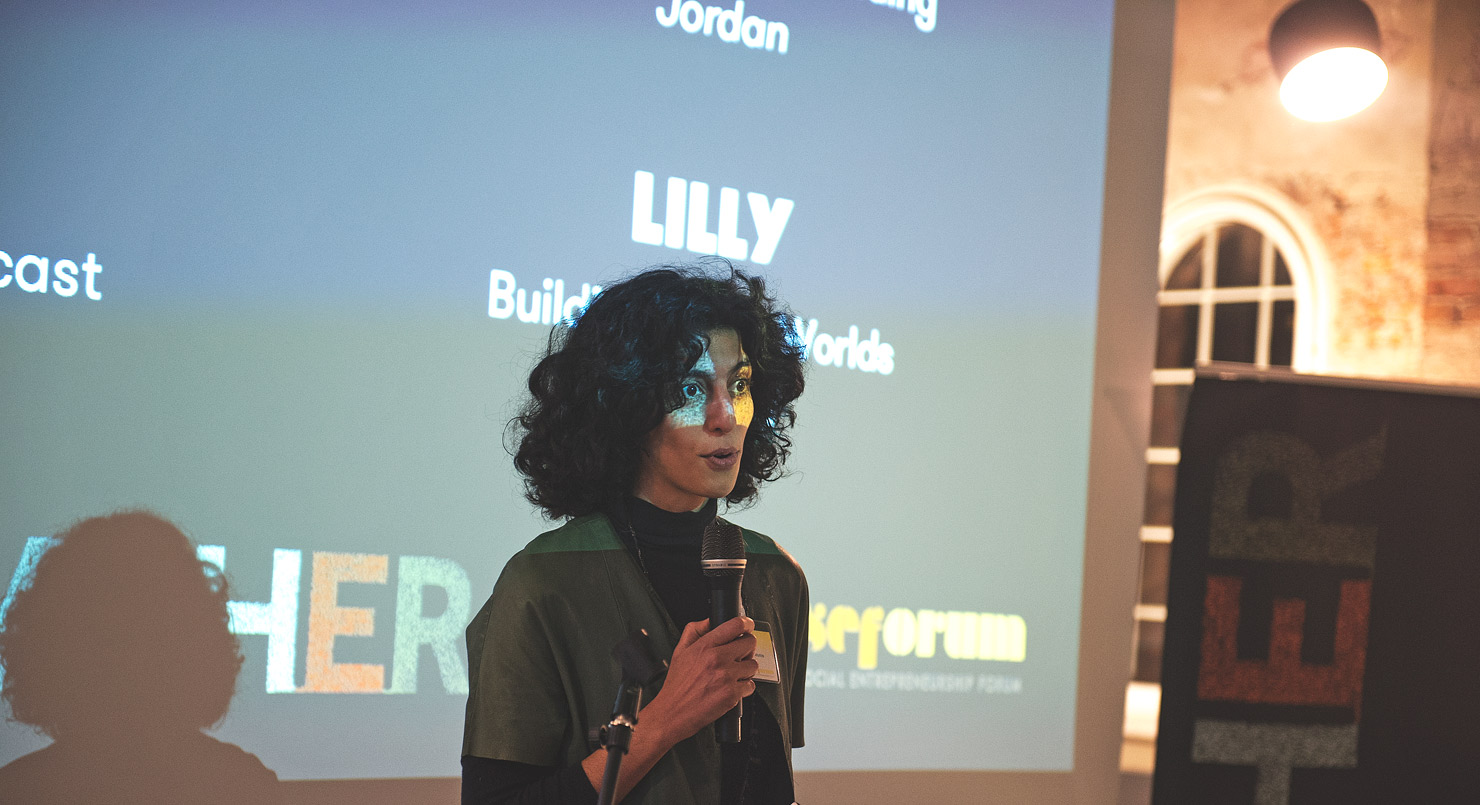
Alumni Profile: Lilly
Building empathy for refugees through Minecraft

Our alumni are working in ways small and large to make an impact in their communities. This “Alumni Profiles” blog series will feature some of our over 7,000 changemakers in 27 countries around the world who are working to transform conflict.

For Lilly, finding harmony across identities and cultures isn’t just her calling—it’s a fundamental part of who she is.

After all, the 2018 Seeds of Peace GATHER Fellow is an American of Iranian descent currently living in London, and her work deepens our understanding of how we use technology to connect with others.

In that same spirit, we had the opportunity to speak with Lilly over Skype as she weathered a particularly dreary rainstorm, nonchalantly sipping tea in her cozy apartment. Suffice to say, she has made the transition to life in the UK very well.

Seeds of Peace: To start things off, what Hogwarts house would the Sorting Hat put you in?

Lilly: You know, I never actually got around to reading the Harry Potter books.

Seeds of Peace: Don’t you live in London?!

Lilly: [Laughs] Don’t tell anyone. I think it’s a punishable offense here.

(Sorry, Lilly…)

Seeds of Peace: What did you read as a kid, then?

Lilly: I read a lot of Herman Hesse and DH Lawrence growing up—stories that have a spiritual aspect and have a deep understanding of human psychology, and that search for meaning and beauty. I also read a lot of Joseph Campbell. His approach to life really inspires me, the way he searched for universal truths across cultures. I always thought my own identity was very rooted in that.

My parents were from Iran, but I grew up in America. So I sometimes felt like I was both a part of and apart from two different worlds. The idea of what unites humanity and what makes us different appeals to me. I think I’m drawn to working with refugees because of that, because of my family history.

Seeds of Peace: Can you talk about what you are working on as a GATHER Fellow?

Lilly: It actually started out back in 2015, when the refugee crisis was reaching its peak. I was thinking about ways to work with young influencers, storytellers, and creators to educate society on the experience of refugees and redefine how we think of refugees, instead of just looking at them as victims. Part of that is also teaching how to successfully integrate migrants into their communities, which means understanding the needs of host societies.

We decided to do so through Minecraft. It’s the most popular game in the world with almost 75 million players. So there’s this huge audience, and because it’s open world, there’s also enormous untapped storytelling potential. I’m working with Syrian-American writer Alia Malek to develop a 45-minute interactive story in Minecraft that follows the journey of a girl who has to flee her hometown in Syria and make her way to safety.

Seeds of Peace: How are you going about developing this story?

Lilly: I travelled to Lebanon, met with Syrian refugees in the UK and France, and spoke to NGOs to craft a story representative of what young refugees are exposed to, while also being relatable to kids.

And this is how I learned about Seeds of Peace’s model of dialogue and identity. The approach really appealed to me: leading by a search for commonality, while also exposing the tragic, individual realities of what young people are forced to deal with in these situations. It’s important to show these hard conditions to a young audience—when I visit schools here in the UK, most children have no idea that classrooms get bombed in Syria regularly.

What really excites me about this project is looking at best ways in which we learn. Because the standardized education model is so archaic and out of touch with our societies and the future we need to build. I’m excited to shape this thing I’m passionate about in a way young people can engage with.

Seeds of Peace: You recently participated in our GATHER incubator program in Sweden. What about the Fellowship so far have you felt has been most helpful? And has anything been especially challenging?

Lilly: I’ve been most excited about having dialogue with people who have similar values but different experiences and initiatives. Also, being part of a network that can offer help. Working with mentors who have a lot of experience with budding projects, getting their input and guidance on turning mine into a sustainable business model, has been invaluable.

I don’t like public speaking, so I’ve definitely been worried about that aspect of things. Seeds of Peace has offered a lot of support with it, though. “Support” keeps coming up in my conversations with people; it’s been a really significant word for me recently. The power to rely on others to uplift you—it’s something for which I’m grateful to Seeds of Peace.

Photos by Stina Svanberg.

February 2021 Notes from the Field Newsletter

Dear Seeds of Peace Community,

Since I joined Seeds of Peace nearly a year ago, we have been working together to respond to a pandemic and chart a future strategy for Seeds of Peace that builds on our pioneering legacy and rises to meet the challenges and opportunities of this moment.
  • More than 500 alumni, staff, volunteers and other stakeholders shared their ideas and input through focus groups, coffee chats, and other consultations.
  • We created innovative online programs which kept our youth and educators connected, in conversation, and learning from each other even while physically distant.
  • We added new members to the Board of Directors, including Seeds of Peace alumni, and we updated our governance and management practices.
  • We integrated Kids4Peace into the Seeds of Peace organization as a program for younger youth with special expertise in interfaith work.
  • As we begin this new year, I’m proud to share a preview of Seeds of Peace’s new strategic priorities, as well as our plans for this spring and summer.

VISION & STRATEGIC PRIORITIES

Our updated strategy is rooted in a commitment to developing courageous leaders to work in solidarity across lines of difference to create more just and inclusive societies. This impact aspiration will be the guiding purpose for everything we do, and it will be the criteria by which we measure success.

Seeds of Peace has always been about life-changing dialogues and human relationships. That will continue to be the core of our work. But achieving peace requires one more thing: a commitment to work together for sociopolitical change. That’s especially true in the face of rising extremism, protracted conflicts, ongoing occupation, structural inequality, and so many other obstacles to peace.

In the coming years, we’ll be more explicit about fostering relationships that lead to action and equipping our leaders with the skills and supports they need to achieve large-scale impact in the places where we work.

Our vision is that by 2023, Seeds of Peace will be a more visible and influential force for change in deeply divided societies around the world. Our leaders will be working across lines of conflict to catalyze the personal and social transformations needed for peace. Our fast-growing programs will be shifting social norms in key communities, and we will be seeing measurable impact at the sociopolitical level.

  • By 2023, our youth leadership programs will reach 5,000 new Seeds per year (10x growth) through an integrated curriculum of dialogue, skill building, and action-taking, delivered in each region.
  • Emerging leaders from across lines of conflict will meet each other through an expanded portfolio of cross-border programs, including Camp in Maine and other international opportunities for advanced-level dialogue, solidarity-building, and cross-cultural learning.
  • Our structure will shift to prioritize regional leadership, so Seeds of Peace becomes a locally rooted organization with a trusted brand and contextually relevant activities.
  • Our strong and respected organizational voice will challenge injustice and offer a hopeful vision of peace for all the places where we work.

In the coming months, we will map out detailed plans around three major strategic priorities:

1. Codify and scale our leadership development programs.
Seeds of Peace has produced transformational educational experiences. In order to grow, we will distill the essence of our method into replicable program models. Once updated and codified, we will train Seeds, educators, and partners to adapt and deliver these Seeds of Peace programs in their communities. A layered programmatic approach will connect participants across local, regional/national, cross-border, and multinational opportunities. We will also update our dialogue model and educational methods to align with our core purpose.

2. Mobilize our community to achieve measurable social change.
Seeds of Peace has shaped the lives of thousands of emerging leaders from around the world, but these individual changemakers are working in fragmented ways. We will integrate the disparate elements of the Seeds of Peace community (youth, educators, alumni, fellows), provide a platform for collective action-taking, amplify our organizational voice, and measure our performance on action-oriented metrics.

3. Root our organization in the regions where we work.
Seeds of Peace is an international community, but with a reputation for being a “New York organization.” We will shift greater authority and responsibility to regional leaders, diversify organizational leadership, define regionally-specific strategies, and adopt best practices of the most professional and effective international organizations.

As we roll out this strategy, we will maintain our current geographic footprint in the Middle East (Palestine, Israel, Egypt, Jordan), South Asia (India and Pakistan), the United States (with expansion to the Midwest/South), and the United Kingdom and other parts of Europe, while seeking out new opportunities for growth. We will roll out Kids4Peace programs for younger youth across our regions and expand offerings for adult changemakers through GATHER, creating a lifelong pipeline of involvement.

SUMMER 2021

As we continue to face the reality of COVID-19, it has become clear that we cannot host campers from outside the United States at Camp in Maine this year.

Instead, we will bring a new generation of nearly 400 Seeds into our community through a regional leadership program in each of the places where we work.

These deep and impactful programs will include at least 50 hours of dialogue, leadership skill development, and action-taking, and graduates of these programs will have access to all Seeds of Peace resources, opportunities, and networks, including international experiences and alumni programs.

We are still finalizing the details, but we expect these programs to be a hybrid of virtual and in-person activities, during the school year and the summer, including two sessions of Camp in Maine for youth from the Northeastern part of the United States, as well as regional seminars and multinational programs across the Middle East and South Asia, when those become possible again. We’ll share program details and the application process by mid-March.

We’re excited about these new program offerings, which will reflect the language, culture, conflict dynamics, and specific needs of each region, while offering all new participants around the world a common set of skills and frameworks that will prepare them for advanced programs. We plan to resume Camp sessions in Maine that include youth from the United States, United Kingdom, Middle East and South Asia in the summer of 2022.

REGIONAL LEADERS

Given our strategic priority around regional leadership, I’m excited to introduce you to our global team of Program Directors. This diverse and skilled group will be driving Seeds of Peace’s growth and development in the coming years as we root our organization locally.

Josh
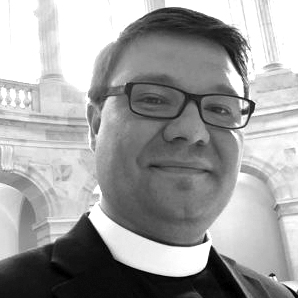
Fr. Josh Thomas | Executive Director, Seeds of Peace


Also in this edition


Meet our Program Directors

Our programs are guided by dedicated local leaders experienced in education and peacebuilding initiatives.

They share why they are excited to work with Seeds of Peace in this moment:

“I’m very appreciative of the new strategic shift of empowering the regions of interpreting the top-level vision and localizing the impact objectives from a regional lens. I’m also appreciative of the renewed attention and commitment from the organization to channel more focus on the South Asian region with all its vastness and promise. We have made some ambitious and excitement plans and along with the local community here, I am pumped to realize them in 2021!”
— Qasim Aslam, Pakistani Programs

“Ever since I was a camper in 2006, I have always known the potential of our Seeds of Peace community. In this moment, more than ever, we are on the brink of change and I am excited and honored to be part of doing this work with Seeds of Peace for our collective liberation and towards inclusive just societies for all of us.”

— Monica Baky, Egyptian Programs

“We live in times when moral courage is being constantly attacked by the loud populists and nationalists. Yet Seeds of Peace is not intimidated by their demagoguery. I join Seeds of Peace in resisting fear, and I am excited to be part of this movement that is dedicated to developing morally courageous young leaders.”
— Farah Bdour, Jordanian Programs

“I am excited to work with Seeds of Peace at this moment because things have changed for the better. I feel more supported in my work and there is a strong commitment for the allocation of more resources in our region. The model is shifting from centralized authority to decentralization of authority and empowering the regional leaders to be at their best. I’ve experienced remarkable change in the processes and my engagement with the senior management has increased manifold.”
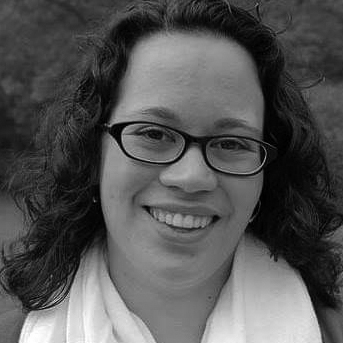
Sagar Gangurde, Indian Programs

“I am excited to work with Seeds of Peace in this moment because in the midst of the pain, division, and uncertainty I see in our country and world, I also see hope. I see hope in the faces, the wisdom, and the energy of our youth leaders. I see hope in our community that is so invested in this work continuing. I am excited to dive into the possibilities of this moment and to work collectively to continue building justice, equity, and peace.”
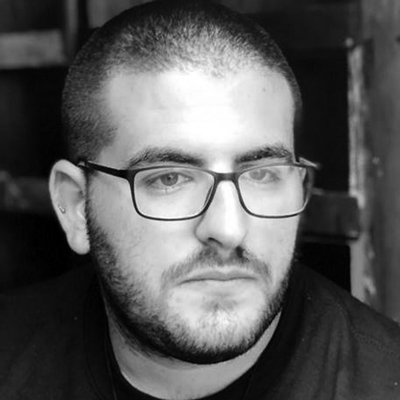
Hannah Hochkeppel, United States Programs (West)

“I’m excited to work with Seeds of Peace at this moment because I get to work with brilliant people, from all across the world, and imagine together a world that is better for all of us. I get to meet brave teenagers who, despite and against all powers that work to separate them, work intensely to buckle up and be in solidarity with one another, and stand together against systems that oppress all of them.”
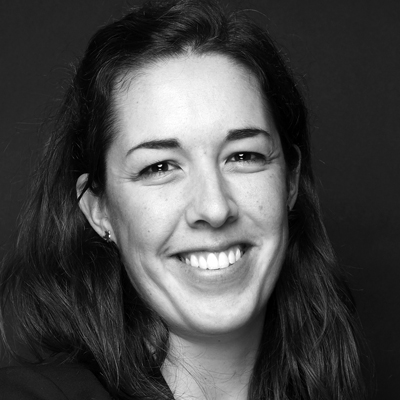
Jonathan Kabiri, Israeli Programs

“With American political polarization and the urgency of racial justice coming more to the forefront of people’s consciousness this year, I feel especially lucky to be on a team that centers dialogue, community, youth leadership, action-taking, and other critical skills and practices that can be powerful parts of the solution.”
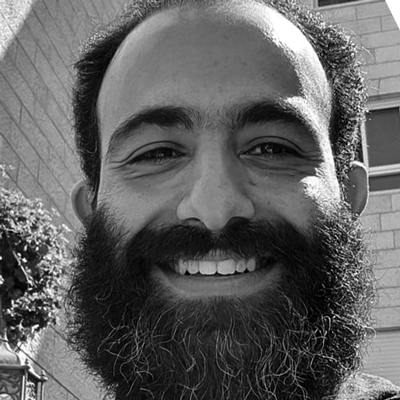
Eliza O’Neil, United States Programs (East)

“With change happening in the Middle East and abroad, it is a very interesting and crucial time where young, future Palestinian leaders will get the space, time, and support needed to allow an indigenous understanding and experience of leadership to emerge so that they may tackle local and global challenges with a deeper understanding and practice of solidarity.”
Antwan Saca, Palestinian Programs


Camp 2021: Updates and Delegations

While the COVID-19 pandemic continues to pose challenges to how we run programs, we are deeply committed to offering opportunities this summer, both in-person and online, that are safe and meaningful for all.

UNITED STATES

In the United States, we are planning for both virtual and in-person options following American Camping Association and Maine COVID-19 guidelines. The Seeds of Peace Camp in Maine will be open to youth who live in Maine, the greater Boston area (including Vermont and New Hampshire), the greater New York City area (including New York City, New Jersey, and Connecticut), and Syracuse.

Tentative dates for Camp 2021 are:

  • Session I: July 11-28 for campers from greater Boston & New York City, and Syracuse.
  • Session II: August 1-18 for campers from Maine.
    For youth in other parts of the United States, we will offer a variety of robust and dynamic virtual programs throughout the months of June, July, and August.

MIDDLE EAST, SOUTH ASIA, AND EUROPE

We are working to plan local programs for youth in Egypt, Jordan, Israel, Palestine, India, Pakistan, the United Kingdom, and France, and we hope to release more information on those programs in the coming weeks and months.

Find more information on Camp 2021 for the U.S. Northeast and sign up for programming updates ››


Seeds of Peace joins peacebuilding coalition


We’re excited to share that Seeds of Peace just joined the U.S. Youth Peace and Security Coalition, run by Search for Common Ground. This formally connects us to a much larger network of likeminded organizations in the United States, and allows us to officially add our voice to legislative advocacy being done by Search for Common Ground to enact the Youth Peace and Security Act.

Learn more about the Coalition ››


Kids4Peace leaders join Seeds of Peace board

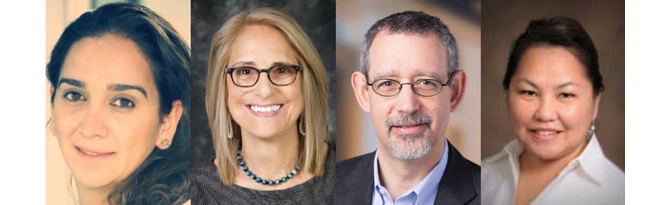
Bringing a wide range of experience in business, philanthropy, communications, and peacebuilding, four former Kids4Peace board members were recently elected to the Seeds of Peace Board of Directors: Maysa Baransi, Susan Bloch, Richard Dale, and Teresa Tanega-Ignacio.

We invite you to join us in welcoming this passionate group to the team, and to explore their biographies.


GATHER wraps 2020 Fellowship


It wasn’t the high-energy social affair that capped off previous fellowships, but the 2020 cohort of GATHER Fellows had much to celebrate when they logged in for the final virtual session of the program in December.

Whether they were standing up to gender-based violence, creating bridges between divided communities, or empowering refugees, every single Fellow in the program for adult changemakers had to find ways to pivot, realign and re-emerge from the impact of COVID-19. For many, GATHER provided the tools and support to do so.

“Personally, I never felt alone during my recovery from COVID due to the support from this group. Professionally, I was able to create stories with female superheroes on social issues and take them to a large audience,” said Saurabh, a Fellow from India.

The GATHER team is hoping to hold an in-person summit at some point in 2021, but in the meantime, opportunities for GATHER alumni are expected to launch this winter, including programs that offer continued development, support, and connection, and an alumni advisory council.

Read more about the 2020 GATHER cohort ››


Kids4Peace Jerusalem welcomes new members


A new generation of interfaith peacemakers gathered in Jerusalem this past December to begin their journey in striving for peace and equality with Kids4Peace.

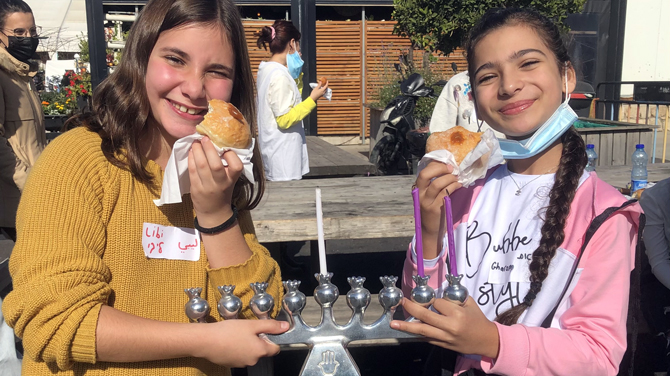
In their first meeting, the Palestinian and Israeli sixth graders celebrated the festival of Chanukah by lighting a special Chanukiyah created by the Iraqi-Jewish artist Oded Halahmy. These Palestinian and Israeli youth believe that it is better to light a candle than curse the darkness—and sharing fun and sweet treats is one way to start!


US winter virtual series kicks off

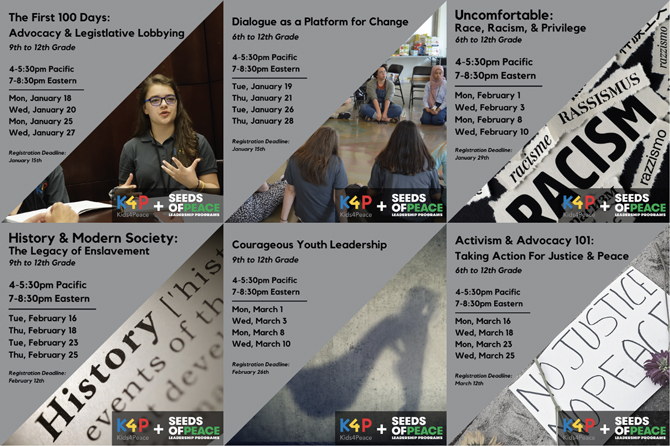
The series of US winter virtual programs are off to a promising start, with the first two sessions—one focused on the first 100 days of the Biden administration and how participants can use their voice to lobby their elected officials, and the second focused on using dialogue as a tool for social change—wrapping up last week.

These timely and relevant programs are rooted in the topics of community-building, dialogue, action-taking, and leadership, just like all seven of our Winter 2021 Programs. The workshops are free of charge and open to all U.S. students in grades 6 through 12, regardless of whether they have previous involvement with Kids4Peace or Seeds of Peace. New participants are most welcome! Visit k4p.org/winter2021 to learn more.


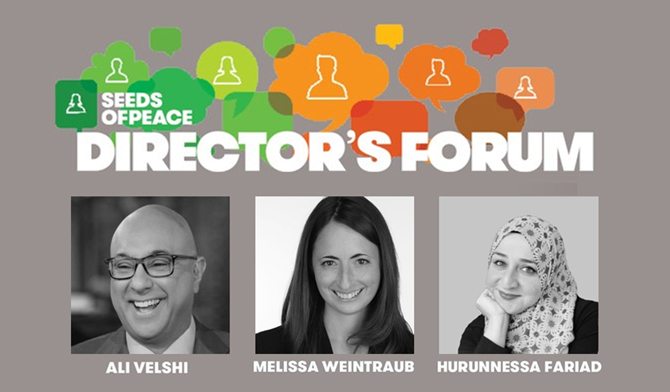
Director’s Forum explores a divided country


In the United States, the presidential election results have been verified and a new administration sworn in—but as we’re all too aware, deep divisions persist across the nation.

How can Seeds of Peace help build bridges across these many divides? Alumni, supporters, staff, and community members gathered with thought leaders in a series of virtual forums in the weeks after the election to address this question.

From Ali Velshi, award-winning MSNBC journalist, we heard the importance of verifying facts with multiple sources, seeking out different viewpoints, and listening to youth.

Melissa Weintraub, founding Co-Executive Director of Resetting the Table, discussed theoretical approaches to dialogue and shared insight from Resetting the Table’s work bridging red-blue divides.

Hurunnessa Fariad invited her friend and colleague—an evangelical pastor—from the One America Movement to join the call, demonstrating the friendship and solidarity that Muslims and evangelical Christians have built in West Virginia through their shared struggle against the opioid crisis.

Our next series will kick off later this winter with a focus on Seeds of Peace’s work in the changing Middle East—keep an eye on your inbox and social media for dates and signup information. We hope to see you there.


Seeds of Peace Community in the Lead


• Salat (2012 Syracuse Seed) received a grant to finish making an autobiographical film Leaving Home But Left Behind.

• Lior (1996 Israeli Seed) was recently named one of the 40 Under 40 by Globes for leading Civic Leadership, the umbrella organization for the third sector in Israel which has led the fight and advocated for government funding and support for all nonprofits which have been hit hard by the pandemic.

• Micah (2004 American Seed) reports for Forbes on an anthem for voters in Georgia, a feature on a Croatian artist and how music can help heal a divided America.

• Jonathan (2011 Israeli Seed) spoke in December at the ALLMEP Shine a Light virtual gala as part of a youth peacebuilder panel.

• Ali Haris (2018 Pakistani Seed) recently facilitated a four-day virtual leadership program for 16 students that included activities and dialogue on topics of leadership, goal orientation, and career planning.

• Sahar (2001 Pakistani Seed) is an advocate of the Lahore High Court and was part of a group who successfully filed a petition to ban virginity tests for survivors of sexual assault in a landmark ruling that’s the first of its kind in the country.

• Ahmed (2009 Palestinian Seed) is connecting Palestinian entrepreneurs, farmers, and artisans to a global market through his new import business, ROOTS Palestine, which ships products like olive oil, za’atar, and sage directly from Palestine to the U.S. and Canada.

• Ilan (1998 Israeli Seed) is co-editor of Public Diplomacy and the Politics of Uncertainty, part of the Palgrave Macmillan series in global public diplomacy. The book was released on January 20.

• Pious (2008 Educator) was featured on a Local Leaders & Racial Equity panel for the 40th Martin Luther King Jr. holiday observance.

• Ahmed (2000 Palestinian Seed) posts regularly and publicly to his Facebook page about scientific data on COVID-19 vaccines. A molecular biologist with experience in oncology and immunology, Ahmed’s analysis allows access and explanation of what seems like complicated data and is especially useful in relieving the stress around an incredibly stressful time.

• Tim Wilson (Seeds of Peace Senior Advisor for Maine Programs) was recently featured in the Portland Press Herald and in the podcast Maine Sports Hall of Fame Legends with Bill Green.

How are you taking action for change? Let us know by emailing eva@seedsofpeace.org.

Camp makes play for peace
Maine Sunday Telegram

Summer camp in Maine isn’t so unusual. Unless of course the campers are Middle East ‘rivals’—Israelis and Palestinians—and politics is all part of the program.

BY ABBY ZIMET | OTISFIELD Flags flutter, multi-hued. Clusters of dark-haired kids stand, heads high, voices rising, each singing their ardent anthem before their flag: Israel’s blue and white, Palestine’s red, black and green.

The flag of Israel, notes a grave John Wallach, rests between Jordan and Palestine. “You are neighbors,” he stresses. “Geographically, strategically and most importantly, as human beings.”

The kids proclaim their inchoate dreams: To “live the hope,” to “make one future together,” to “take every day like a jewel.”

Then, arm in arm, they enter the Seeds of Peace camp. Inside, only one flag flies: the green Seeds flag, its three small figures holding hands, burgeoning forth from an olive branch.

“Once you come in,” Wallach says, “we’re a new nation.”

In the face of ancient, grievous hatreds, symbols matter, profoundly. Flags are one part of the intricate methodology of Seeds of Peace, the summer camp Wallach founded in 1993 as an exercise in “the politics of the possible.”

This year, its sixth and perhaps most difficult, Seeds faces new challenges and yet boasts new strengths. With the peace processes in the Middle East at an impasse, the political climate—and the mood of some kids who emerge from it—is charged, even bellicose. At the same time, this year’s kids are veterans of both war and peace, with the staunch skills to prove it.

Here, historic enemies who had once never met “the other guy” will meet again and again, unavoidably, usually amicably, sometimes not. They will play Frisbee, tennis, volleyball. They will swim together, eat together, sleep together. In daily facilitation sessions, they will debate Jerusalem or the West Bank and have to reach détente, even if only agreeing to disagree.

They will do all this within Seeds’ painstaking, multi-layered framework, which leaves nothing to chance. Their beds will be staggered: Arab, Israeli, Arab. They will wear T-shirts that make them all look the same. They will play the team-building Color Games, which in most camps is Color Wars.

Slowly, it is hoped, they will come to constitute Wallach’s vision of “a kids’ U.N.—a network of building blocks toward a peaceful future.”

They will come to compromise. To coexist. And, despite centuries of enmity, to hug. Often.

Noa Epstein, an Israeli, is one of many alumni who have made Seeds part of their lives. At home, Noa visits and calls Palestinian friends. They come to her house.

She and her Palestinian friend Abdasallam once went on a sort of pilgrimage in Jerusalem: He took her to the Dome of the Rock, she took him to the Wailing Wall, where they placed a plea for peace in three languages.

“That is what Seeds is about—getting to know a person as a person, not an Israeli or Palestinian,” she says. “It’s building something, unstoppable, for the future.”

This summer, Seeds is hosting delegations from Qatar, Egypt, Morocco, Jordan, Palestine, Israel, the United States and Cyprus. Two thirds of the campers are either Israeli or Palestinian.

While the kids must all speak English and show leadership qualities, they otherwise represent an ethnic and political cross-section. There are Jews from settlements, Palestinians from refugee camps, Israeli Arabs. Families contribute part of the $2,500 tuition. The rest is paid by scholarships.

The summer’s first session was devoted to almost all Seeds alumni and activists.

At home, with the help of a Seeds office in Jerusalem, the kids visit across borders, produce a quarterly newspaper with editors and subscribers in four countries, and have an Internet site. In May they held a week-long Middle East youth summit in Switzerland. Later this month, they will lead a group trip to Jordan, Haifa and Palestine.

The task of bridging centuries-old chasms is a tough one. Notes one camper, “If you want peace, you must forget everything.”

Maine, safe and green, is where they start. After years of roving the state, Seeds has a 10-year lease at the former Powhatan Camp on Pleasant Lake.

It is summer-camp timeless: leafy grounds, stacked canoes, glistening lake. In the screened bunks, shampoo and bug dope sit on window sills. Placid and still, it is what an Israeli boy calls “a utopia that we can make like our lives.”

Seeds, says Noa Epstein, “changed my life.”

Cogent and eloquent, she can argue in her musical English the fine points of the 1993 Oslo peace accord or the Palestinian Intifada.

She has met Secretary of State Madeleine Albright and lit candles at the funeral of Prime Minister Yitzhak Rabin. She has none of the self-consciousness of pubescence; there is no flipping of hair. She seems her age—newly 15—only when a large bug crawls on her, at which point she shrieks.

Ice-skating in Portland the week before, she dislocated a shoulder. Now she sits on her bed in Bunk 10, stuck in a sling. Mona, a Palestinian friend from the West Bank, makes Noa’s ponytail for her.

Back home, Noa had Mona to her birthday party. She also visited a Palestinian friend in Aroub, one of the gritty refugee camps that have given rise to the most radical Palestinian elements. Noa’s father, who fought in the Yom Kippur War, couldn’t bear to go. “Every person has their own limits,” she says mildly. Her mother took her.

“I owed it to myself and my friend,” she explains. “I don’t have the right to talk about the refugees if I haven’t seen what’s going on. Otherwise, how am I gonna make her life better, and my life better?”

Before Seeds, had she ever met a Palestinian, a regular kid, like her?

“None,” she says with passion. “Never. No. No way.”

Camp forces coexistence

Utopia begins here with smalltime all-American pleasures; baseball, Ping Pong, swimming, street hockey. With cross-cultural e-mail in mind, there is also a computer lab with eight computers and two in-house computer gurus.

Each day the kids have six activity periods and one facilitation session, says Jerry Smith, head counselor, “though I prefer to think of it all as facilitation.” Smith is the kind of intricate mix common among staff: a burly, drawling, good old boy and thoughtful, tough-talking lawyer. His pediatrician wife is camp doctor.

Says Smith flatly, “Everything, including the table where they sit, is planned. It forces them to coexist, whether they like it or not.”

He runs a tight ship: He put the boys to bed early the night before for “too much horseplay.” When he walked the bunks, he heard them talking—not of girls, but of occupied territories. He left them to it. They had work to do.

“This year we’re asking them to go to another level,” he explains. “It was feeling like, ‘I know where you stand, you know where I stand. Let’s leave it at that and play soccer all summer.’ But they are not just here for the country club. We have to convince them they can make a difference in their own lives. That’s the truth of Seeds. If we can make one Israeli and one Palestinian not hate each other, it’s a start.”

Andy Arsham, 25, echoes the take-what-you-can-get approach: “Even if they’re yelling, it’s good, as long as they’re listening.”

A graduate student in genetics, Arsham heads the baseball staff, which is him and two other happy guys in baseball caps. One is Michael Gaies, a Harvard Medical School student, who notes that the kids are savvy, but still kids.

“You forget they’re 15-year-old kids who get homesick because they’re half a world away from home,” he says. “They’re well-versed in politics, but they’re still normal teenagers who put shaving cream on sleeping bags and get goofy with the opposite sex.”

Nearby, girls string beads at a long table, swaying, Jew and Arab alike, to Palestinian music. They bend over their unsober work, intent. They also paint each other’s faces with markers, squealing: “Oh this is so cool!” Are the markers washable? One shrugs, laughs: “We take risks at Seeds of Peace.”

Sara Al-Jabari strings tiny red, blue and purple beads. A 15-year-old Palestinian who lives in Hebron, she knew no Jews until she came here last summer: “Before, I only see soldiers. Then I meet the people from Seeds. Now I love the Israelis. Noa is the best.”

Sara’s father ran a “petrol station” that the Israelis closed because it was near a mosque that was bombed. Her mother teaches. When Noa asked Sara to her house, Sara’s father, uneasy, insisted Noa would have to visit first.

Noa made the hour’s drive to Hebron. She brought Sara flowers, saw her room, met her parents.

Then Sara went to Noa’s birthday party in Jerusalem. At first, she was afraid: “Israeli house, Jewish people.” But it was great. She runs to get snapshots: she and Noa, two teenage girls, hugging, grinning, full of joy.

“It was a very good step,” she smiles. “It feels like I did something for my country. It was saying we have to do this with each other.”

Learning to compromise

The beads are a break from more rigorous, collaborative art projects—this year, a tough task. In one, kids had to draw a 360-degree landscape, relying on the vision of those on either side of them.

In another, they assembled group books portraying their hopes. Suzy Sureck, a New York City sculptor who runs the art program, says consensus has been so hard to achieve that one group of Israelis and Palestinians made four books: Book of Love and Friendship, Book of Reality and Dreams, Book of Dreams Coming True, Book of Future and Forgiveness.

This year, says Sureck, there is “more attitude … the hard truth of the difficulty of compromise.

“They come and it’s all peace and love and you’re my friend,” she says. “And then it’s hard, it’s you killed my father and my people have suffered more than yours and the Holocaust and lots of tears. Then, hopefully, they come together.”

Before lunch, they come together for lineup and announcements: soccer, baseball, dance rehearsal. The sea of green T-shirts flows to the packed dining room. They pause for a carefully inclusive grace: “For friendship, health, love and opportunity, we are thankful.” Lunch is a raucous, sandwich-scarfing, table-pounding affair, with kids veering and bouncing.

Noa, a vegetarian, attacks a mountain of salad. Next to her sits her thick biography of Palestinian leader Yasser Arafat, background reading for an ongoing debate with her friend Abdasallam.

This year, says Noa, the process of conciliation feels arduous, “like another step on a staircase.” She knows it is not simple, this complex weighing of outrage and faithful hope. She is full of hard-headed reality.

On life in Israel: “It’s a small country—you always know someone who’s been killed.” On a recent bombing in Jerusalem that killed three girls her age: “It’s so scary but you can’t stop living because you’re afraid.”

After the bombing, her Palestinian friends phoned her “all day, ALL DAY.” She and Sara talk in Arabic, which Noa is learning. She still wants to visit Gaza, hotbed of Palestinian discontent. All of it, she insists, can bring change.

“If two people from camp become leaders of their country,” she says, “imagine what that could do…”

Building on experience

To forget about the past and build a future, camp organizers teach kids to say “I” not “we,” to argue from experience, not history. It is sound advice for born-to-war children of opposing sides who at some point, says one, “realized we both had studied history in order to hate.”

The undoing of history is not always weighty. Near the ping-pong tables, rock’n’roll wafts from WSOP, a Seeds radio station that Palestinian Mohammed Yanez has set up. It offers profiles of peacemakers and historic analyses as well as shows on Rod Stewart, Billy Holiday and a range of rockers.

More music drifts under the trees, where women practice a cappella. They are working on a song Noa wrote: “A watchful eye, a listening ear, and a loving heart/ Are what makes two people come together, not drift apart…”

Then they practice “The Rose,” their sweet voices floating: “I say love, it is a flower, and you it’s only seed.” They struggle to pull the harmony together.

“Remember,” says one, “we are one voice.”

At home, says Sara Al-Jabari, whenever she has to do a school project, she does it about Seeds. She talks to Noa “every week, always.” But it is sometimes difficult to explain to Palestinian friends that she has Israeli friends.

They have not, after all, experienced Seeds: “They are living the reality, I don’t blame them.”

It is inevitable, Sara says, that she and Noa sometimes shout at each other in political arguments. But when they say goodbye at the airport, tears flow.

“Sometimes I feel like Noa is my sister,” she says. “If you are at Seeds, you change your thinking about the other side.”

Making dreams come true

Before supper, another lineup. The sweaty soccer players rush to jump in the lake. The rest of the kids surge toward supper. More slam-bang table-thumping.

The evening coexistence session is a circle of chairs in an empty bunk. Four Israelis, two Palestinians. Sara moves her chair across to Noa, who puts her arm around her. They are all asked to share their goals.

To try not to shout, says one. To agree about something, says one. They decide to discuss Jerusalem, a thorny issue. An Israeli boy wants to divide it. With a wall? With soldiers? They poke at the idea.

“Jerusalem is one city,” Noa protests. “It’s where I grew up. It’s a place of beauty, created for peace.”

Tremulous, Sara tells of visiting a mosque where a bomb had killed her uncle, and how frightened she was: “This is a dream, but that was the reality.” Noa, her arm still around Sara, speaks sharply to her.

“It’s your job to make it a reality,” she says. “You have to work at it.”

For an hour, the tension ebbs and flows. They decide to set up committees and issue a report. They end, agreeing it was a good session.

“I feel like everything inside me goes off,” says Sara. “I opened my heart.”

She and Noa drift off to the evening concert. Arm in arm, chattering, a fervent, newborn world unto themselves.

Clinton praises India-Pakistan students sowing ‘seeds of peace’
TwoCircles.net

BY IANS | NEW DELHI Mahek Mansoor, a 15-year-old student from Pakistan couldn’t agree more with US Secretary of State Hillary Clinton when she said that youngsters from both the countries can “sow seeds to transcend boundaries” at an event in Delhi University Monday.

Mahek is one of five Pakistani students on an exchange programme here. But it’s her second visit to India and, in her own words, she is “enjoying every bit of it”.

“We reached India day before yesterday and went to Mumbai. I find Mumbai very much like Lahore. It’s a great city. Same is with Delhi,” the young student of King Edward Medical College in Lahore, told IANS.

Mahek was part of the student exchange programme organised by Seeds of Peace, an organisation that aims to empower young leaders in regions of conflict in the Middle East and South Asia. It was formed in 1993.

All praise for the nature of the initiative, Clinton said: “I am very happy that students of Seeds of Peace are here today. Students of India and Pakistan can sow seeds to transcend boundaries.”

Dressed in a formal white suit with a string of pearls around her neck, Clinton, who spoke for nearly 20 minutes before interacting and taking queries from students at the university’s Convention Hall, said that it is very important for leaders and people to keep talking.

She also stressed on people-to-people contact.

After gently directing Shrinjoy, one of the students of Seeds of Peace, to “hold up the microphone” to his mouth so that one could hear his question to her clearly, Clinton said “it is important that students of both the countries are coming together” for a dialogue.

Shrinjoy had asked Clinton on the youth’s role in combating terrorism.

Using an analogy from the Cold War to underscore her point about the need for continuous conversation between nations despite hostility and differences in ideology, she said: “When I was growing up, the Soviet Union and Communism was as scary to us as terrorism and extremism is today. We have this sense of the wrong we have nothing to do with them they have nothing to do with us.”

“But our leaders never stopped talking, they went to summits, our diplomats got engaged to look for ways to avoid nuclear wars or other incidents,” Clinton said.

“So I am a big believer in talking, that doesn’t mean you give (up) your principles, your values, your safety and security but through talking perhaps progress can be made.”

Clinton stressed on the need for expanding people-to-people contacts in the South Asian context.

“I hope we find new and creative ways to enhance people-to-people connect in this region, some of them through organisations, some of them through businesses and some of them through academics. I believe in it very strongly and I think it holds great promise.”

Impressed by what Clinton said, a student-member of the delegation said: “We really believe what she was just saying. That no matter what happens, both our countries should not stop talking. And as youngsters, we can be vanguards of change, of bringing about peace in the region. That’s what we all want.”

All the students in the delegation are 14-15 years of age.

Read this article at TwoCircles »