


Camp 2026 in Numbers
- 120 campers representing 8 delegations: Egyptian, Indian, Israeli, Jordanian, Pakistani, Palestinian, United States, United Kingdom.
- 15 Seeds returning to Camp for advanced leadership program.
- 32 hours of facilitated dialogue for new campers.
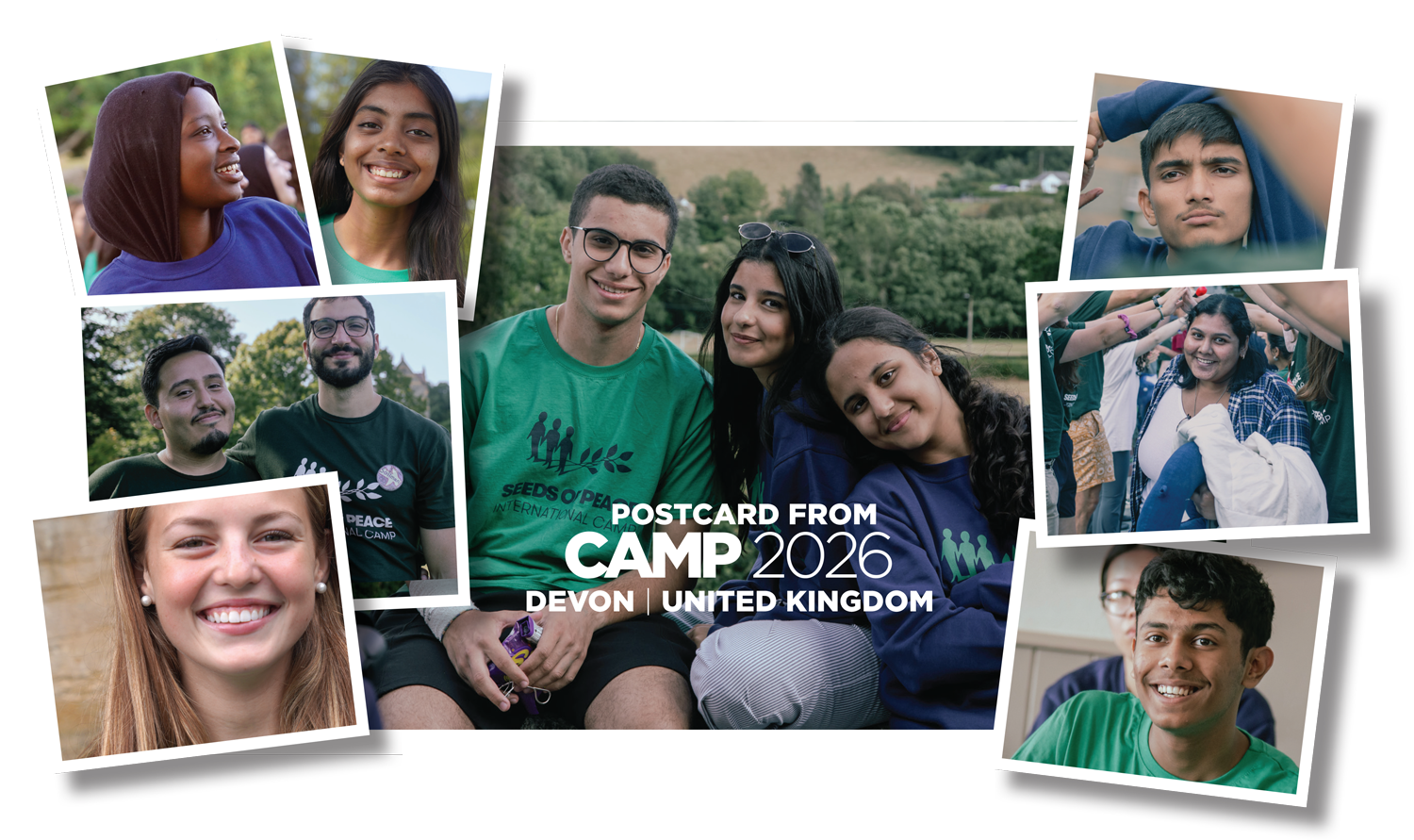
MIDDLE EAST, SOUTH ASIA, UNITED STATES, UNITED KINGDOM
Departures | August 8
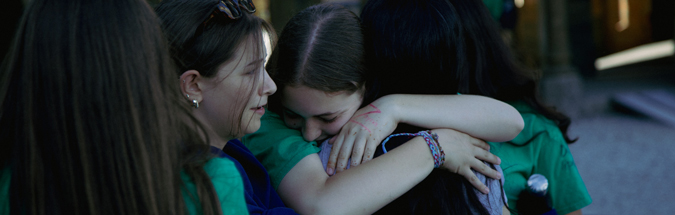
We all woke up early to send off most of the campers. There was a lot of crying and hugging as the bus packed up with luggage. Having most of the campers leave made the end of this Camp session feel very real. Now we are cleaning the spaces we have been using and packing our bags.
The staff had a long meeting this afternoon, with everyone giving feedback about this session and the staff orientation right before it. Every staff member took part in open-ended evaluations of the leadership team, how the Camp operated this session, and the training process. As usual, the feedback included a mix of criticism and praise.
Tonight, Mohamed Hassan, a Seed who is now a counselor, screened a “documentary” about being a counselor at Seeds of Peace. Most of the audience members were in the film, so there was a lot of laughter in the school’s theater.
Another Seeds of Peace Camp is winding down. We will take a breath and start planning for next summer.
Religious Services | August 6
The end of Color Games made everyone realize that Camp itself is approaching its end. The campers made their last phone calls to their families and continued gathering signatures on their T-shirts. They are also collecting contact information for everyone they want to stay in touch with.
A more relaxed atmosphere prevails in the dining hall, and unstructured time is spent socializing with new friends. The early morning joggers will have their final run tomorrow. Each delegation held a final meeting today to prepare for their trips home. Even though our campers live in far-flung areas of the world, the music they enjoy is familiar to them all. Tonight, we ended the day with some of their favorite music and they danced together in one big group.
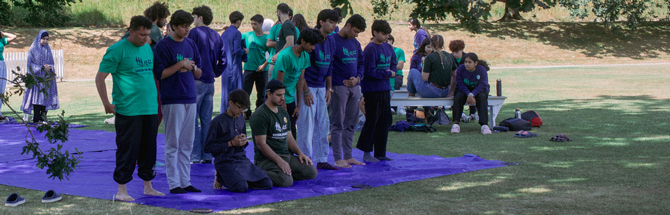
Throughout Camp, we held religious services for all represented religions. This final week, all the religious observances were open to everyone. Like many years in the past, Bobbie Gottschalk led a silent Quaker meeting, open to everyone at Camp. Out of the silence, the attendees shared their Camp experiences and what it felt like to sit in silence within the community. This experience sharply contrasted with the cacophony of conversations happening at Camp.
Tomorrow will be the final full day here.
Message to Hajime | August 4
For the Color Games Message to Hajime series of challenges, participants performed various tasks: running, doing sit-ups, completing algebra problems, playing Tic-tac-toe, doing push-ups, drawing the Seeds of Peace logo from memory, learning dance moves, playing Charades, turning cartwheels, executing head-passes with a football, solving a riddle, learning and correctly reciting a tongue-twister five times, making origami paper boats, tossing water balloons to another camper without breaking them, jumping rope 30 times, wearing six T-shirts, braiding another camper’s hair, reciting the ABCs backward while standing on one foot, etc.
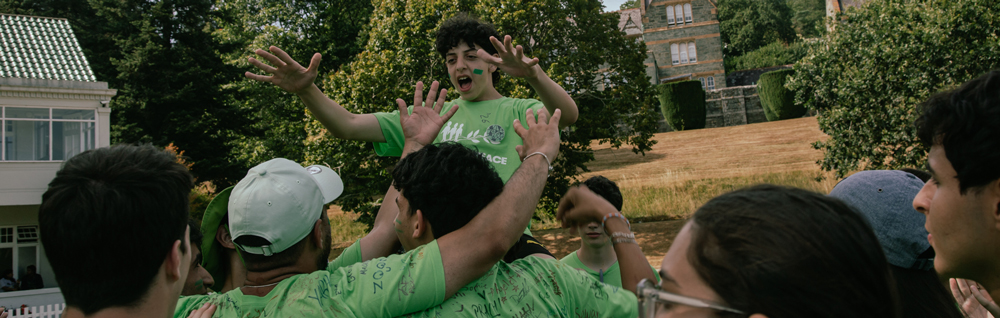
Since this site lacks a lake like we’ve had in the past, instead of having the winners jump into the water, fully clothed, we sprayed the winners with a garden hose and then sprayed everyone else. This turned out to be almost as much fun as jumping in the lake. Afterward, we stood in a circle and sang the Seeds of Peace Camp song, as we have done for decades.
We scheduled Color Games a few days earlier in the Camp session than usual, to give the campers more time in dialogue periods to unpack their Color Games experiences. This time, we have four solid days to recover from the competition.
Right after we ended Color Games, we gathered the camp for some all-Camp pictures. Stelios, our videographer, came up with the idea of spreading the campers out on the field in letter shapes to spell “Seeds of Peace.” They formed the letters by lying down, without any guidance from the adults. Then we took a full Camp photo the traditional way.
Tonight we held a trivia competition between the Camp staff and the campers. The questions were mostly geographical, but some also covered music. The last part was a photo identification challenge: naming the staff members from their baby pictures shown on a screen. Naturally, these pictures were a big hit.
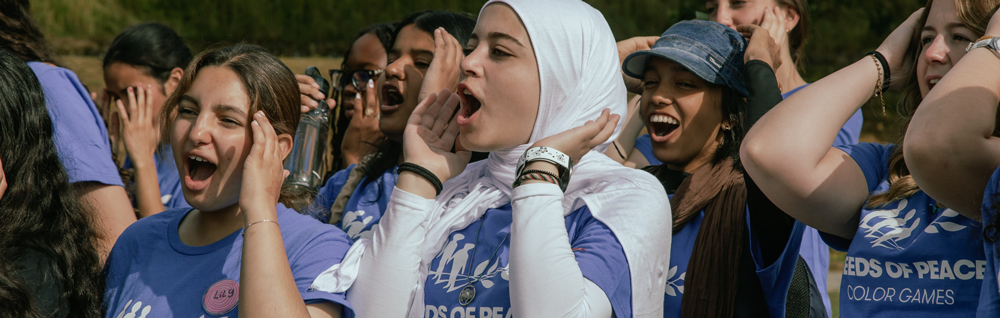
Color Games | August 2 & 3
The past two days have been packed with Color Games challenges. With the entire Camp divided into two teams, the setting comes alive with bright colors and much energy.
Each team has several coaches who carefully guide their members, positioning them favorably to win at all the sports the campers have played here, as well as in art and cooking projects.
At the end of Color Games is a marathon of tasks that each team must complete at various stations around the property. At each station, a baton is passed until the team reaches the final station. This last station requires memorizing a quote, relevant to Seeds of Peace, but unfamiliar to the campers. Ultimately, the teams are judged on their conduct as much as their actual scores. This year, the Blue Team won.
We have been extremely lucky to have fairly cool weather and bright sunshine. Anticipating the end, campers have begun signing each other’s Color Games shirts. Many will likely adorn bedroom walls back home.
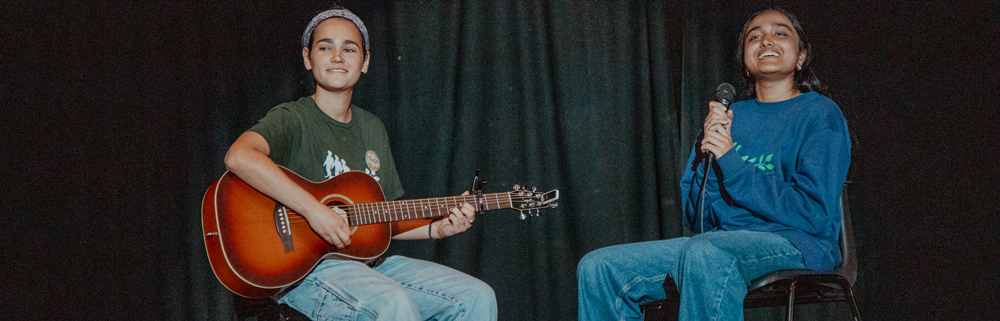
Talent Show | August 1
The camper talent show preparation is going strong. Behind the scenes, counselors are working hard to prepare for the multi-day Color Games competition. This will surprise most campers. The entire camper population will be involved. They will find out which team they will be playing for (Blue or Green) and which counselors will coach them. For staff, leading a team of campers through Color Games will be the culmination of their experience as counselors.
The Talent Show is another vehicle for personal and group growth. Some campers have hidden talents that will amaze us. The PSs expressed their hope that male dominance will not sideline female campers, so hopefully, that wish will be heeded. It is amazing that this topic was raised in a public forum at Show Up. We are trying to make our time together into “the way life could be.”
Moving the talent show to the afternoon, followed by dinner, is a good scheduling change. Both the performers and the audience have more energy to enjoy the event. This move also shifted the start of Color Games to the early evening timeslot. Now the Camp is divided into two sections: one Green and the other Blue. For the next two days, these teams will compete in almost all the activities available to the campers. Each team will accumulate a total score that determines the winner of Color Games. Aside from these scores, they will also be judged on good sportsmanship and mutual support.
Tomorrow, everyone at Camp will rise early for the all-Camp rope pull. Here we go again!
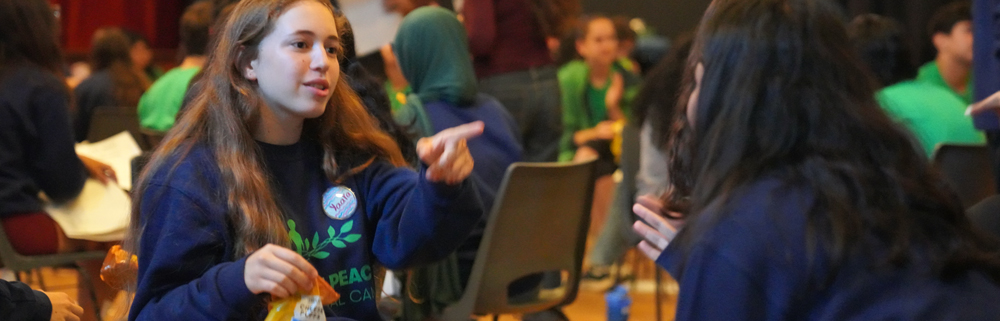
Café Night | July 30
Tonight, the second-year campers (called Peer Supports or PSs) did what they have done for two decades: they created a café atmosphere for the new campers in the theater and served them snacks and juices and then they asked the campers to sit with someone they hadn’t really spoken with yet, for five minutes. After five minutes, all the pairs were asked to switch to another person they hadn’t yet met. This process repeated several times. By the end of this evening, everyone had made five new friends! Five times they each had stepped out of their comfort zones and expanded their circle of friends at Camp.
The camper talent show is coming up. So people are fitting in mini practices wherever they can. Suddenly, ballerinas appear. Campers practice dance steps. This talent show is bound to be wonderful!
The campers and staff also realize that Camp means long days and short weeks. Suddenly, Camp feels more like home and less like a foreign land. Suddenly, the people around us feel like we have lived together for a lifetime. We have shared our fears, our aspirations, our hopes with these people, and now we dare to talk of leaving each other in a little over a week. What has happened to our tentative shyness? When did we become so bold and confident?
The Camp staff has remained open to suggestions and generous with its gratitude. A cardboard tree of appreciations is hanging on a public wall for everyone to notice. Public appreciations are part of every day. Staff members are quick to apologize and offer praise. This is becoming more and more like the way life could be.
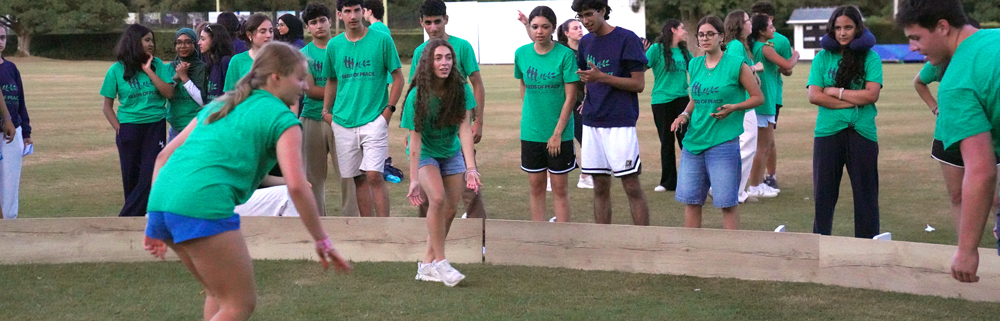
A Perfect Day | July 29
Today was warm and sunny with cool breezes. It was a perfect Camp day. We spent the entire day outside, taking advantage of the good weather.
During the day, we enjoyed unstructured time and special activities. The special activities vary each year, depending on the counselors’ skills and talents. This time, we have several art counselors. Campers are constantly making friendship bracelets, using water bottles to steady the weaving of colorful threads. Poetry and sketching are also popular. There is also an intensive class on stretching.
Last night, by tradition, we held the “World Cup of Ga Ga,” a game that requires opposing teams to avoid being hit by the ball from the knee down and forces players to hit the ball with hands only. The campers were divided into six teams. The winners competed with one another until the final winner emerged.
Taking a Hike | July 27 & 28
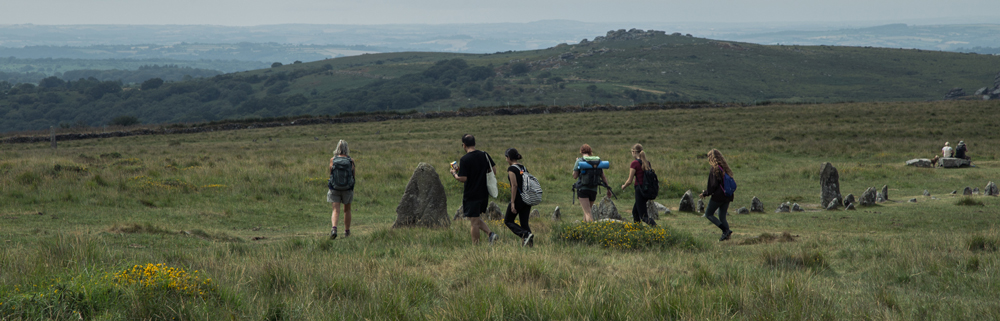
The second-year campers had the chance to hike together outside of Camp, while the new campers stayed at Camp. They saw beautiful scenery and kindly helped one another over the challenging parts of the hike. This type of activity draws the group together while also building individual hikers’ confidence.
The international cultures night is another way to bring the group together, even though the food and music may be unfamiliar to some. Watching their fellow campers express themselves in song and dance increases mutual appreciation and understanding. It can also bring out their differences and competing loyalties. The counselors who live with the campers need to spend time afterward helping them mend their hurt feelings. Many counselors were campers themselves, so they understand how confused and hurt some campers feel.
We also held an all-Camp scavenger hunt the night before the international culture night. There were stations all around Camp where each of the three teams had to respond to a challenge, such as performing a song while moving the cups in unison on a table. The campers also had to perform the chicken dance while moving between challenges. Having fun together in the evening is a critical part of our program. Laughing together minimizes differences and soothes hurt feelings.
Group Challenge | July 26
This was a normal day, featuring dialogue sessions, group challenge, and a scavenger hunt for everyone at the end of the day. Although the campers are happy to have schedules, they still have given us feedback, suggesting they need more unstructured time to get to know each other better.
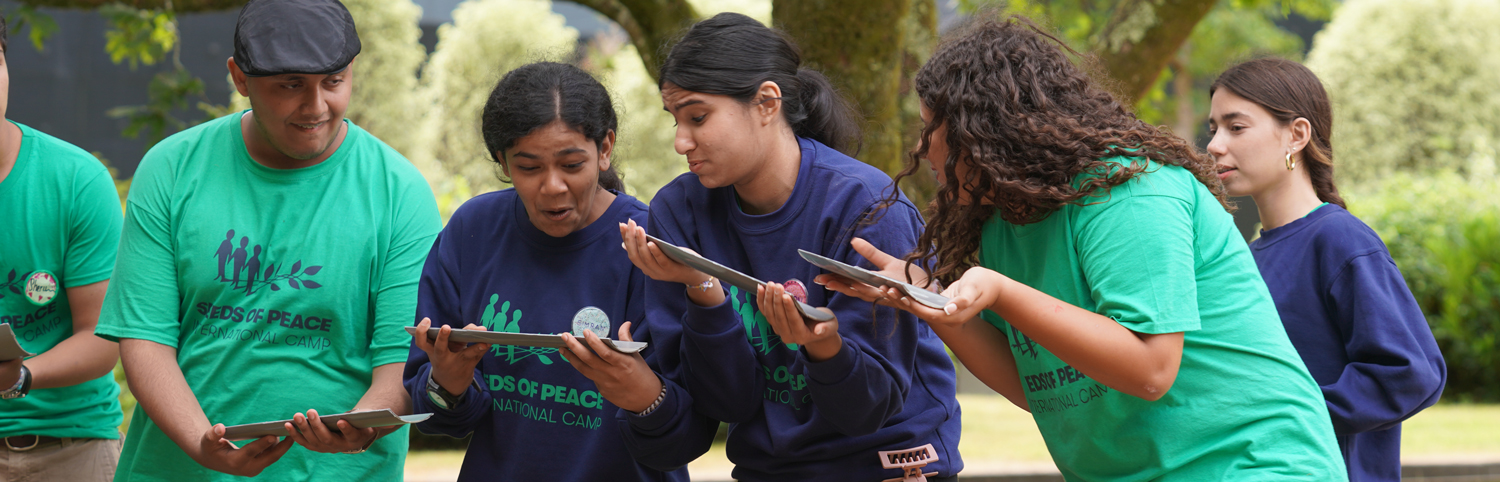
Group Challenge sessions expedite their understanding of one another by posing tasks which require everyone’s participation to solve a group objective. For example, one group had to pass a small round marble from one person to the next by rolling it from one curved pipe fragment to another without using their hands. They also had to pass an empty tin can from one person to another without using their hands while seated on the ground in a circle. At first, these challenges seemed destined to fail, but after several attempts, the groups succeeded. At the close of the session, the group debriefed their experiences with the group challenge staff. Several years ago, we introduced the group challenge curriculum to augment the dialogue sessions. This methodology highlights stumbling blocks and helpers in each group. It also encourages the development of new leaders.
At night we had a scavenger hunt for the whole Camp. The campers, divided into three large groups, went from one station to another, performing the tasks at each station for the judges. In some cases, the campers had to learn how to do a task, on the spot, in other cases, the task was familiar to them. Walking with a book on top of their heads without dropping it or performing a song were two examples.
Group Dynamics | July 23 & 24
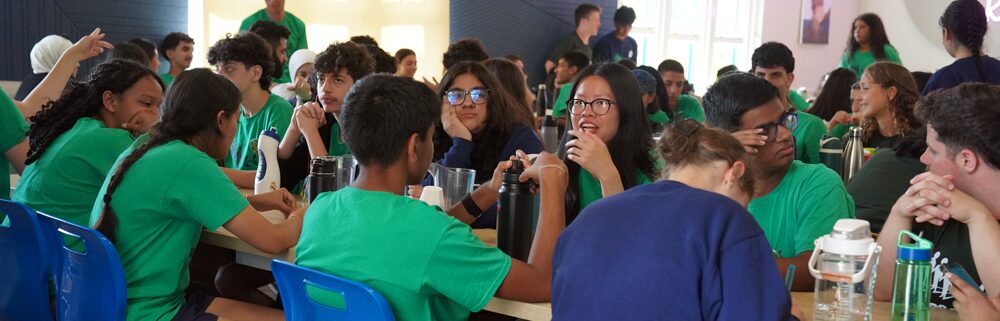
The campers have settled into their bunk, table, and dialogue groups. Each group consists of different campers, from across all the delegations. This maximizes their opportunities to meet most of the other campers. The dining room is loud with conversations and table cheers. All the tables rotate to the serving area, taking turns to ensure fair access to the food. During dinner and right after the meal, campers take turns phoning home to check in with their families. This first time talking with their families can be very reassuring to those who have travelled thousands of miles from home. But for some, the calls home really tug at their heartstrings.
Some of the campers are more socially outgoing than others. They volunteer to help others and lead their groups seemingly without hesitation. Others are not so comfortable doing this. This group can benefit from encouragement from second-year campers or counselors. Like most high school environments, there is a “cool crowd” and then everyone else. The unstructured time is a welcome change for the cool crowd, but it can be very painful for those whose social skills aren’t sufficient to join that group. Fortunately, we have professionals on staff who can help everyone feel accepted.
We had two energetic evening programs in the past two days. One was a lip-sync contest between randomly selected groups. The other was a Trashbag Fashion Show. For both activities the campers were given a little preparation time. And then they performed for the entire Camp. The fashion show was especially creative. The campers were only given black plastic garbage bags, some tape, colored paper and scissors. The winning fashion models dressed as a bumblebee and a ladybug.
A Community Complete | July 21 & 22
Six campers from Jordan finally made it to Camp on Tuesday. They were welcomed with open arms and the staff talent show. Now, we have every delegation with us.
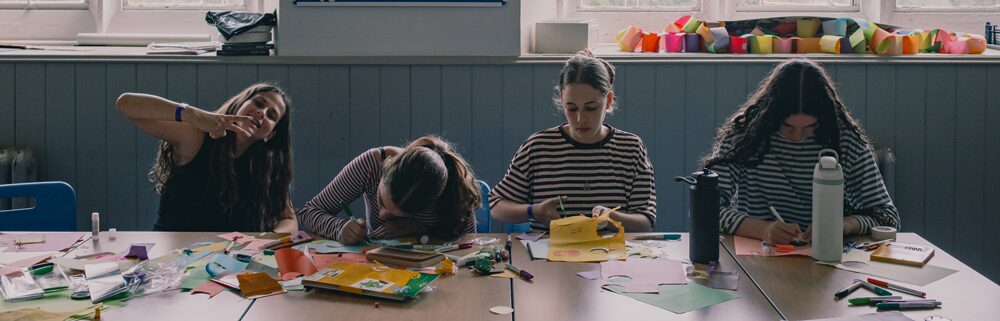
Dialogue groups meet for two hours daily, with half of Camp meeting in groups the morning and the other half in the afternoon. The half of Camp not in dialogue takes part in sports and arts activities. Today, the arts activity group took a nature walk together, in silence, and then returned to the art room to either write a poem or draw, as inspired by the nature walk.
All of our meals are enjoyed in a dining room, close to the kitchen, which offers lovely views of the rolling hills across the valley beyond the Camp. The kitchen staff does their best to provide palatable meals for all of us, regardless of our normal comfort food. If it is mild enough for some people, it can be too spicy for others. Some people prefer very salty food while others prefer no salt. Then there are the various religious restriction and allergies. Yet, all the food is served with great care.
After lunch, we have a rest hour, which many people jokingly call the “best” hour. Before dinner, there is an hour of unstructured time outside on the field. During that time, many sports activities are offered, as well as time to read under a shady tree or practice for a musical performance. Some campers use this time to write in their journals, while others engage in quiet talks.
We have also had several sports competitions between the staff and the campers. Volleyball and football (soccer) are favorites for these contests.
After dinner, we have Show Up, followed by an entertaining activity. So far, we have had a fantastic staff talent show and a rousing game of “The Mostest.” For the latter, the campers compete in their dialogue groups to perform best at challenging prompts. Each team sends the person in their group best suited to perform the prompt. Then the person who performs the prompt the best, becomes the “mostest.” For example, one prompt asked for the group member who was the best at push-ups. Another, asked for the best chicken dance performance. The campers had the most fun imitating their counselors. They were really good at that one, even though this is only our third day of Camp!
The older returning PS campers have been calling out people at Camp whom they admire for their kindness and generosity. This encourages others to show their appreciation as well. It is all part of our group effort to build a new community of disparate people, despite the historical and current differences between their peoples.
Flag Raising | July 20
Today our focus was on community-building, kindness and dialogue. When we assembled for Show Up, the benches were all in the hot sun, so the counselors quickly reassembled the seating area in the shade of an ancient nearby oak tree. That configuration seems ideal.
As we sit under the protective branches of this tree, we can’t help wondering what the tree could tell us if only it could speak. In the background, instead of the cry of the loons on the lake in Maine, we hear the throaty hoot of an owl. Most of all, we listened to the wisdom of some of the counselors who have become campers, Paul, our Camp director, and Bobbie, the co-founder of Seeds of Peace.
Paul addressed his reasons for being part of Seeds of Peace and asked the campers to think about why they decided to join us. Bobbie spoke about a sign we used to have at our old camp site, which was painted by campers after they listened to a poem by Rumi, a 13th century Persian poet. The sign said, “This is the field,” referring to Rumi’s poetic lines, “Out beyond ideas of wrong-doing and right-doing, there is a field. I’ll meet you there.” These campers wanted us to think of Seeds of Peace as that field of understanding that Rumi was talking about.
In the afternoon, campers took on staff in volleyball. This turned out to be a lot of fun for both sides.
We have worked hard to come up with a way to have enjoyable meals together even though the dining room is a little small for us. The food is served cafeteria-style and much effort is made by the kitchen staff to meet the various dietary needs of almost 200 people. The traditional table cheers keep everyone engaged as they wait their turns to get their food.
We raised one flag that unites us: the green Seeds of Peace flag. We celebrated it by singing the Seeds of Peace Camp song. Incidentally, the son of the Seed who wrote the word for this song is now a camper!
Tonight was the first “bunk night,” an excellent way to encourage all the bunk groups to enjoy each other’s company in their “home away from home.”
Arrivals! | July 19
Most campers arrived yesterday, a bit tired but in good shape. Two more campers will arrive in two days. We have around 120 campers this year, from the Middle East, South Asia, the United Kingdom, and the United States.
Among them, are several second-year campers who will be given advanced dialogue training and opportunities to lead the new campers in the arts and sports. They also carry forward many traditions, including our universal blessing before every meal: “For friendship, health, love and opportunity, we are thankful.”
Several practices have changed over the years. For example, for the first time, we have changed what we used to call “Line Up” to “Show Up,” conveying the idea that we make a choice when we gather together. It is not a demand. And we have always gathered the whole Camp together for Line Up, before each meal. This year we are gathering after breakfast and dinner.
We hold Show Up in the shade of a giant, ancient oak tree beside the sports field. We will be remaking a sign from our first Camp which said “This is the field.” That sign was in reference to the famous Rumi poem, which starts with: “Out beyond ideas of wrong-doing and right-doing, there is a field. I’ll meet you there.” The Seeds who painted that sign wanted us to see a double meaning—that we had a sports field and that Seeds of Peace, itself, is the field in Rumi’s poem.
The evening activity was a surprise chance to watch the World Cup final on a big screen in the theater.
Staff Orientation | July 18
For many years, we have composed daily Camp reports for parents and other interested persons to follow along as the summer progresses. These reports are attempts to capture the essence of the Seeds of Peace International Camp experience. Of course, we can not describe each person’s experience, but we hope these reports will provide glimpses into the daily experiences of the campers and staff.
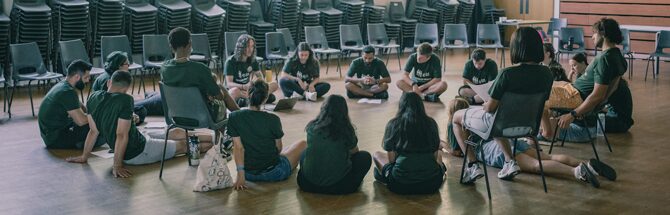
Researchers at the University of Chicago, led by Professor Jane Risen—who attended Camp herself as a camper and later as a counselor—measure the impact of the program every session. The principle that is behind this impact is simple, but the methodology for creating positive impact can be complicated and challenging. First, we begin by bringing the staff together for a strong orientation, where they live and learn on-site. By the time the campers arrive, the staff has become a community of helpers, understanding one another and enjoying our shared purpose.
The staff consists of a leadership team, led by Camp Director Paul Stapleton, dialogue facilitators, counselors who live with the campers and lead activities, as well as medical personnel. Many are former campers, living their dreams to be counselors at Camp. The entire staff has been trained in a trauma-informed approach. We follow strict guidelines to safeguard every person in our Camp community. We also endeavor to have fun while learning new skills and discovering our commonalities and uniquenesses.