
Search Results for “{search_term_string}”

Seeds of Peace launches private network to reconnect alumni

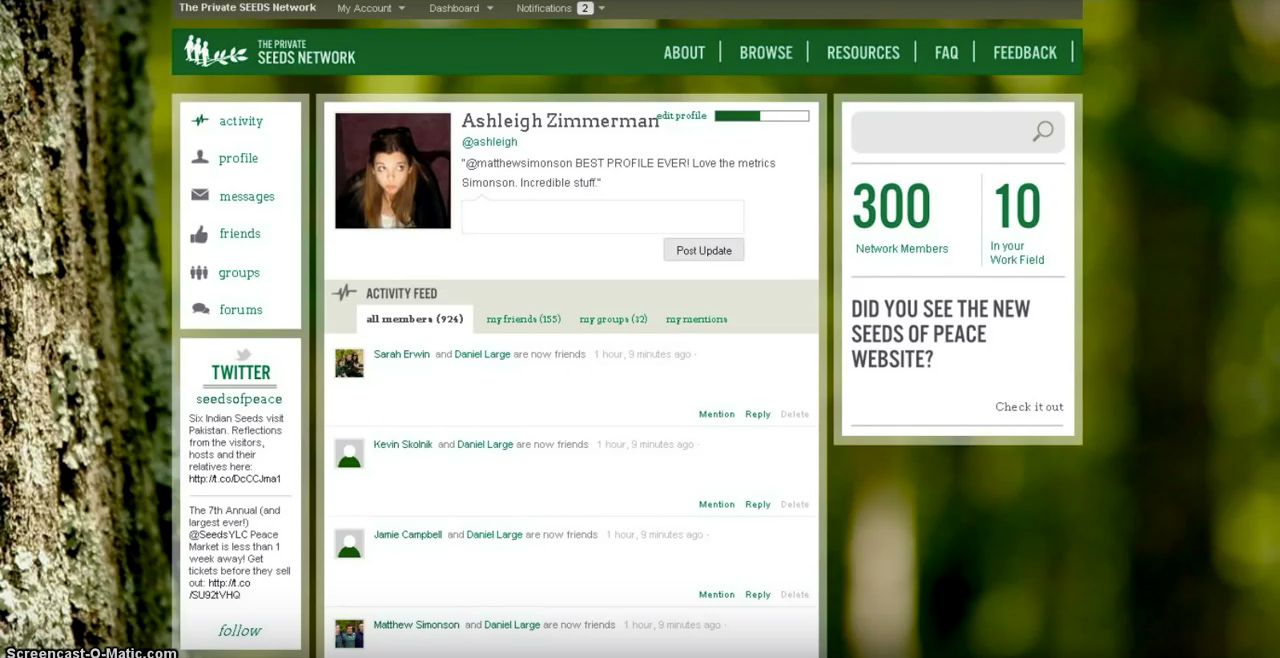
NEW YORK | Seeds of Peace has launched a custom-designed online community exclusively for graduates of its program (Seeds).

The Private SEEDS Network aims to keep Seeds connected after their first experience at the Seeds of Peace International Camp by allowing them to continue the important conversations they began in dialogue sessions, stay up to date with news from Seeds of Peace, network professionally, find support, and work together to create change within and between their communities.

Designed by MADEO, a creative firm founded by Egyptian Seed Ramy Nagy, The Network is a flexible platform that responds to the needs of Graduate Seeds seeking to network professionally and reconnect with peers they first met 15 years ago, Senior Seeds wishing to share their experiences in university, and Junior Seeds needing to stay connected to Seeds of Peace programming taking place in their communities.

To be able to respond to these various needs, The Network’s design includes easy-to-use browse functionality for members to search for Seeds from their delegation, camp session, current city, educational field and professional field. In addition, Seeds can join online dialogue groups to discuss matters related to conflict or create a group around a topic of mutual interest.

Seeds of Peace’s investment in this platform is evidence of the continued support the organization provides for its members. Seeds from 1993 will remember relying on mail and fax to keep in touch in the pre-Internet era. Now they can connect in a fast, meaningful and secure way designed specifically for them.

As one Seed reflected, “I love the fact that I can finally find friends based on locations, year at camp, and other variables so easily. I’ve already gotten in touch with friends I’ve fallen out of contact with and two are working in my field!”

Within its first week after launching the network, nearly 1,000 Seeds have reconnected on The Network while making new connections and starting new conversations. The Network serves over 5,000 graduates, with over 500 new Seeds to be invited each year.
Seed Stories: Advancing horizontally and saving the world

Right as I was finishing university, the global economic crisis of 2009 was in full blow. I applied for various jobs, from post-graduate university teaching positions to translating technical and/or scientific articles.

I was even waitressing early morning shifts in a local bar in Zagreb, Croatia. However, all were either substitute or short-term positions. So gradually, I started applying for jobs on an international level.

I got an internship at Energy Changes, a consulting company based in Vienna, Austria. Since I graduated from Faculty of Natural Sciences with majors in physics and chemistry, the field of energy efficiency and clean development, which was the main focus of the company, seemed like a fit. During that time, the company was divided into two branches: Global and Regional (Austria-Hungary). I was interning for the Global office and, some of my duties included monitoring international tendering processes, entering projects into the database, and preparing senior consultants for onsite work. I really thought we were helping to save the world.

Everything would be fine, and I would probably still be working, maybe not in that company, but in the field, if it weren’t for two crucial things:

1. By following the tendering, I soon came to realize that some financiers were offering support more in favor of traditional solutions, rather than to clean development and energy efficiency projects. Oh, and by the way: through tendering one can get a grasp of how the monetary support is divided and organized throughout the world, and it’s not a nice picture for someone as idealistic as I was at the time.

2. The final blow was the implosion of The Kyoto Agreement, which expired by the end of 2012. Despite the Doha Amendment, signed by 2013, the international CDM-stock market (clean development mechanism) imploded, and small consulting companies struggled to even survive. The company where I worked, for example, was reduced to Regional level in just six months.

I have to say I was left disappointed, but that grew to disgust after the Paris Agreement was signed in 2015. It was shocking to see how global memory lasts for five years at the most. Personally, it felt like someone just reset the board for new players of this grown-up Monopoly game. Maybe I’m a bit harsh, because no one can take away the self-sustainable water cleaning systems set up in central Africa, or the photovoltaic advancements made in Dubai projects, but it all kind of discouraged me from pursuing a career in that field.

Soon after, I got a teaching job in one of the most respected high schools in Zagreb. At first, I thought this would be an in-between job until I figured out what I wanted to do with my life. I am happy to say that I am still working there and I love it. I teach high school physics and chemistry in Croatian, but also in a German-Croatian bilingual program, to 14-18 year olds. In contrast to consulting, I find working with teenagers more rewarding.

I feel like some effects of my work are immediate and instantly recognizable (like the “aha moment” you get after simplifying a problem), and some become evident a few years after students graduate. I have a sense of pride when I get my students to think critically and express their confusion or dislike of something, but are still able to maintain a good discussion, and respect for others participating. What is also endearing is to hear from students how you helped them to choose a certain path in life.

Being a teacher in this day and age, even in an underdeveloped Croatia, offers so much more than regurgitating the same material for different classes. Now, we can develop and participate in a lot of international student exchange and cooperation projects. My experience in consulting really comes in handy as it relates to proposal preparations, asking for financial support, and evaluation. By letting students participate in such tasks, it can help them get an insight of how the bureaucratic side of successful projects works. Some end up choosing that as a career path, others are at least made aware of the process.

By interacting with young adults just as they set off in the world, it’s interesting to see how much and how little things change from one generation to another. I am hopeful I have reached at least some of my students, and that they will affect others and further expand the network. By doing so I’ve begun to regard teaching as one of the most important and rewarding career paths offered.

I really do think that the experience at Seeds of Peace showed me how productive a group can be once trust is established, as well as some tools of mediating that I started unconsciously using while conducting my classes. Being a Seed also determined what I value in life. Being able to communicate the importance of mutual understanding and respect in conflict resolution, and ultimately achieving and maintaining peaceful coexistence, keeps me going. I may never see that dream come true, but having met so many wonderful people from so many different cultures and conflicts, I believe it is possible. It just demands perseverance and determination.

So instead of working in consulting and traveling the world while simultaneously saving it, I now have a job where I can do exactly that and so much more. Instead of advancing vertically through society, I am now advancing horizontally, by creating student/teacher networks, similar to Seeds of Peace, for quick and reliable exchange of information.

Jordanian Seeds discuss environmental peacebuilding initiatives with EcoPeace

AMMAN | Twenty Jordanian Seeds traveled to the Sharhabil Bin Hassneh Ecopark on November 28 for a briefing on environmental peacebuilding with EcoPeace–Friends of the Earth Middle East (FoEME).

FoEME brings together Jordanian, Palestinian, and Israeli environmentalists and activists to work toward sustainable regional development and to promote the necessary environmental conditions for lasting peace in the region.

The seminar began with a presentation by Liza Kawar, the Good Water Neighbors/Youth Coordinator at FoEME. She explained how resources are shared in Israel, Jordan and Palestine, the reasons for and implications of the deterioration of the Jordan River, and the status of the agreements concerning the Jordan River Rehabilitation Project.

Many of the participants were unaware of the long-term water challenges facing Jordan.

“I never knew about these issues,” said one of the Seeds. “The presentation gave me a lot of new information that I want to share with my friends so we can make changes in how we save water in our homes.”

In the next session, campers were exposed to FoEME’s faith-based campaign to rehabilitate the Jordan River. The organization is engaging community partners by illuminating how all three Abrahamic faiths historically perceive water use and the Jordan River. The campaign utilizes citations from religious and holy books to garner support for rehabilitation initiatives.

In the afternoon, FoEME gave a presentation on advocacy campaigns in environmental activism. The campers learned about how to implement an effective awareness campaign.

Participants were then separated into groups and tasked with developing a short campaign. They had to identify the target group of the campaign, decide on a media format through which they would convey their message, and script the message itself. The three groups produced creative presentations with messages about conserving water and protecting the environment.

“The part of the program where the Seeds had to design a campaign helped them to really reflect on the internal dynamics within Jordanian society,” said Seeds of Peace’s Middle East Program Director Donna Stefano.

“One of the tasks included identifying the target group for the campaign and there were many interesting discussions about how the youth perceive environmental issues, their ability to impact change, and how different classes of Jordanian society can respond differently depending on their education and financial abilities.”
 
ENVIRONMENTAL PEACEBUILDING

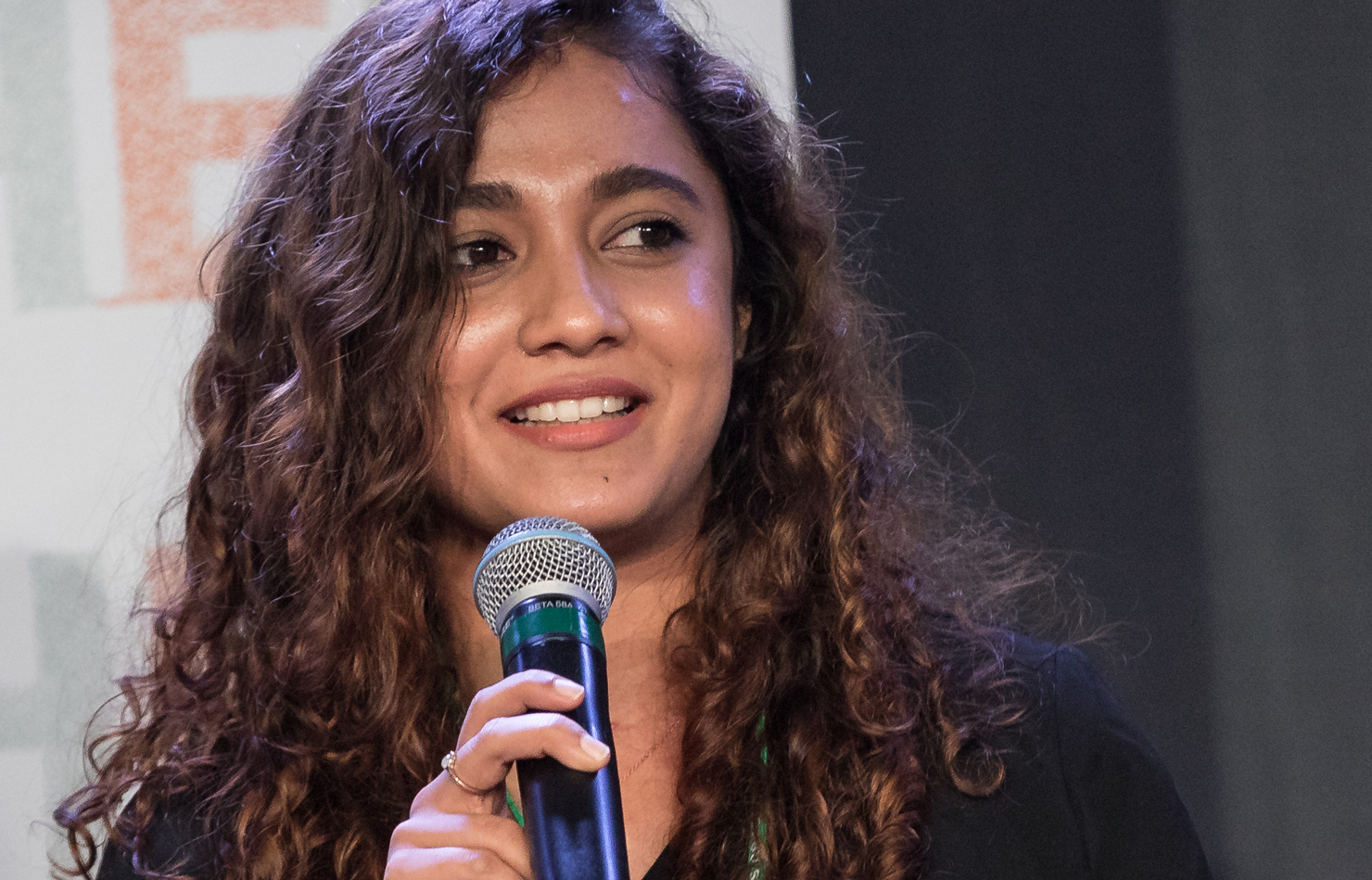
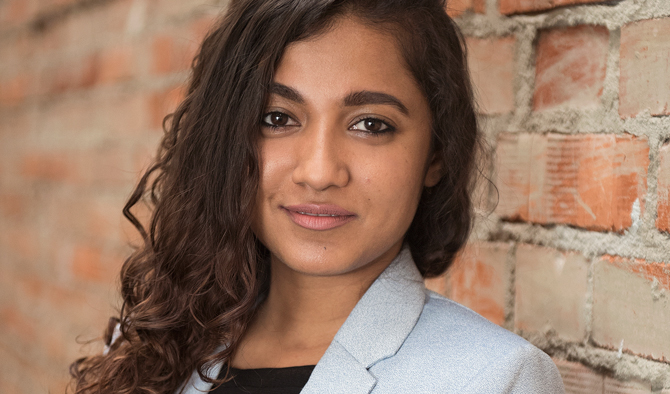
Alumni Profile: Pooja
Humanizing and supporting refugees

Our alumni are working in ways small and large to make an impact in their communities. This “Alumni Profiles” blog series will feature some of our over 7,000 changemakers in 27 countries around the world who are working to transform conflict.

In 2015, the Syrian War and ensuing refugee crisis were making headlines. Social media allowed people around the world to follow this conflict in real time like never before. It was this phenomenon that inspired Pooja, a 2018 GATHER Fellow and Seeds of Peace Camp counselor from India, to do whatever she could with whatever she had to humanize refugee communities.

“It was the first war in our time that was livestreamed through social media and it really bothered me how we could just watch it happening and not do anything about it,” she says.

“Also, the fact that more than 50 percent of the victims were kids—it just hurt me. The very fact that we are so used to treating these large-scale humanitarian crises with frivolity—I just wanted to do something about it.”

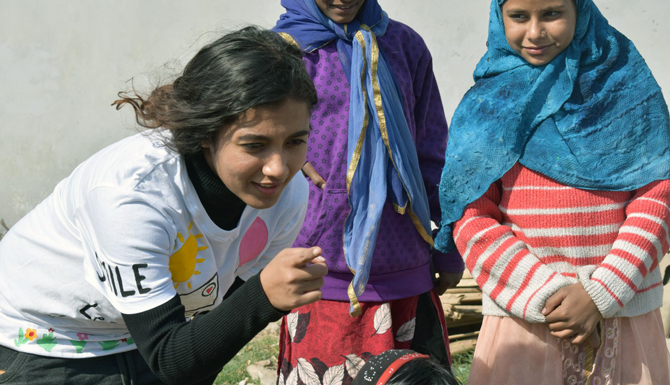
She founded the Letters of Love initiative with the goal to connect communities, give people a global perspective, and humanize the “other.”

Letters of Love began as just a “Facebook page with a bunch of friends around the world,” who were united around the idea that something as small as a handwritten letter could connect communities, build empathy, and make a real difference.

It has since grown into a youth-led non-profit that connects children around the world to peers in refugee communities through writing and delivering letters. It is also an official member of the United Nations High Commissioner for Refugees #WithRefugees Coalition, the United Network of Young Peacebuilders in the Hague, and the UN Sustainable Development Solutions Youth Network.

In just three years, Letters of Love has delivered handwritten postcards to more than 30,000 Syrian, Iraqi, Yazidi, Palestinian, Afghan, Kurdish, and Rohingya refugee children, and has effectively engaged more than 20,000 youth.

“We empower refugee children with joy, laughter, and psycho-social support, and we use empathy-centric education as a tool to sensitize school and university students about the ongoing refugee crises,” says Pooja.

Even before becoming a GATHER Fellow or a Camp counselor, Pooja’s connection to Seeds of Peace was essential to making Letters of Love a reality. When her husband, himself a Seed, mentioned the initiative at Camp, a counselor took note. That counselor reached out to Pooja and became her mentor as she began to develop Letters of Love.

Pooja says that her involvement with Seeds of Peace over all these years has been a transformative experience, one that has shaped her personally as much as it has her professional mission.

“I’ve witnessed the value in connecting communities that are indoctrinated to hate each other, and I’ve seen the value of communication and dialogue.”

Pooja says that the GATHER Fellowship has connected her to a diverse community at the crossroads of social innovation and conflict transformation. This has given her access to potential partnerships, some of which she has already pursued, which she says has helped increase her impact both qualitatively and quantitatively.

“Being part of the Fellowship enables me to become a part of this ebullient community, share best practices, learn various aspects of setting up an organization, and also derive a multicultural and international perspective on various social issues.”

An experience Pooja had as a counselor at Camp also inspired the Pen Pal Project, an offshoot of Letters of Love that uses strategic mapping dependent on age, interests, and other factors to connect high school students to peers in refugee camps in a more deliberate way, and on a more long-term basis.

“In my bunk, a Palestinian camper was freezing at night, and this Israeli camper put a blanket over her. The next day the Palestinian camper didn’t know how to thank her, so she wrote a letter in Hebrew with the help of a few other Israeli campers and handed it to her first Israeli friend. It was such a powerful moment.”

The campers told Pooja that they wanted their friends back at home to be able to connect with “the other” in the way that they were able to at Camp. Although Pooja, through Letters of Love, could not address the Palestinian and Israeli communities directly because of political barriers, she found another way to create an exchange of perspective and foster what she calls “unimaginable friendships.”

Through the Pen Pal Project, 350 students in India were connected to 350 children who were Syrian refugees in Turkey, internally displaced children in Syria, and Palestinian children in a community center in Gaza.

More than anything, Pooja hopes that participating in the Letters of Love initiative inspires young people to have more of an impact in their own communities.

“It’s about highlighting the potential of each young person as a change agent in society.”

VIDEO: Seeds of Peace facilitates dialogue programs in Sweden, United Kingdom

Building on two decades of experience running dialogue programs in communities in conflict, Seeds of Peace is now partnering with other organizations to bring its model to new areas.

Over the past few months, Seeds of Peace partnered with Ung Dialog, a Swedish organization that counters anti-Semitism, Islamophobia, and other forms of racism and discrimination, and run a dialogue program for teenagers in the United Kingdom.

Sweden

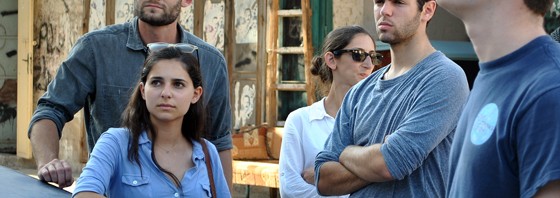
Two Seeds of Peace staff members created and conducted a four-day workshop for 13 Muslim, Christian, Jewish, and secular Swedes ages 18 to 26. The program, held on on Ekskäret Island off the coast of Sweden from May 31 to June 3, cultivated participants’ leadership abilities and allowed them to build positive relationships with “the other.”

The inaugural Ung Dialog cohort, with Seeds of Peace facilitators Orlando Arellano and Kyle Gibson.
Many participants had ties to communities outside of Sweden, including Syria, Somalia, Lebanon, Palestine, and Israel. There were also individuals who were newly arrived to Sweden under refugee or asylum-seeking status from Syria.

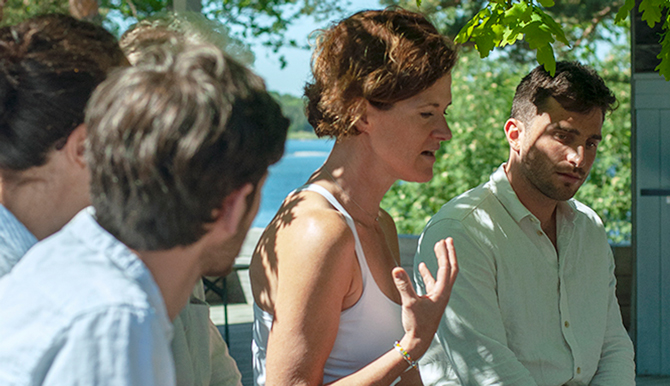
Through dialogue and skill-building activities, the program developed teamwork and communication skills. Participants also engaged politicians, social entrepreneurs, and individuals working with Sweden’s refugee and asylum-seeker communities.

Participants speak with Anna Kinberg Batra, former head of the Swedish Moderate Party.
“Through this program I learned that it was okay to feel, and to express my feelings for the first time,” said one participant.

Another said, “I have gained an understanding and perspective I missed … I think the opportunity to actually meet and hang out with people who have a different background than me can build long-term and lasting relationships.”

United Kingdom

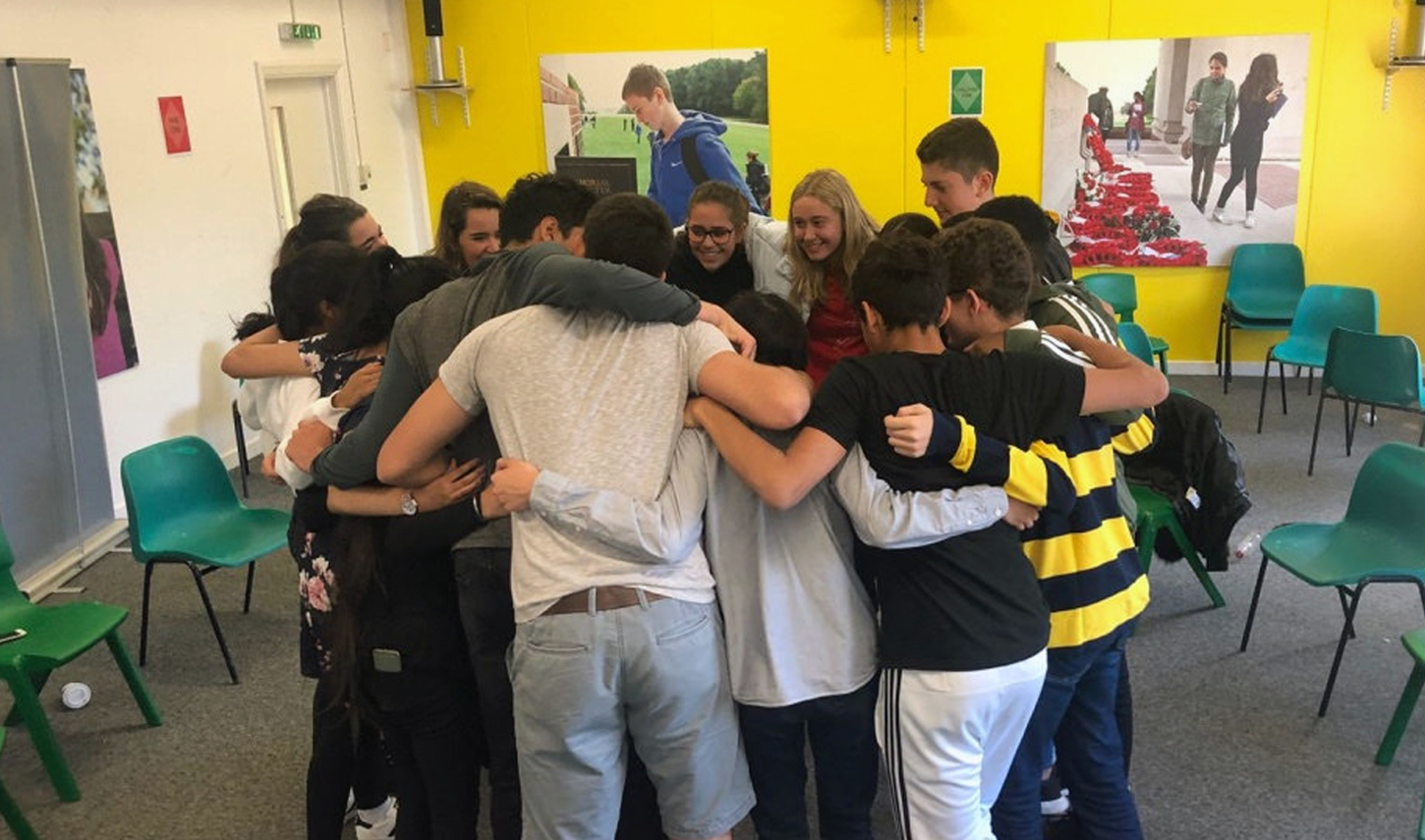
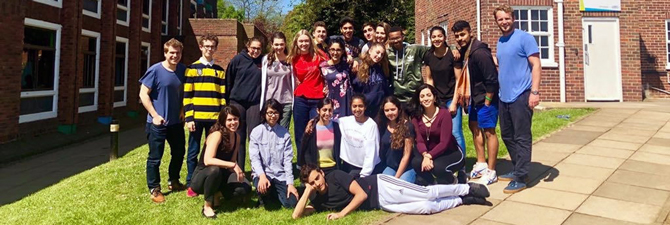
Meanwhile, in the United Kingdom, Seeds of Peace recently ran its first-ever UK Dialogue and Leadership Seminar at Grosvenor Hall in Kent. The event, which ran from May 4-7, allowed a diverse group of 17 London teenagers to explore topics like identity, gender, immigration, race, and interpersonal conflict as part of an intensive training experience.

Program participants and facilitators of our UK Dialogue and Leadership Seminar.
From there, Seeds of Peace staff helped them develop their own leadership and facilitation skills. By the end of the weekend, participants were even facilitating their own dialogues!

In the words of one attendee, “I gained a maturity through listening to others’ opinions and experiences.”

Another said, “I hope to be able to use these skills in my everyday life and at school, where I would like to start a ‘dialogue and facilitation club’ open to the whole school.”

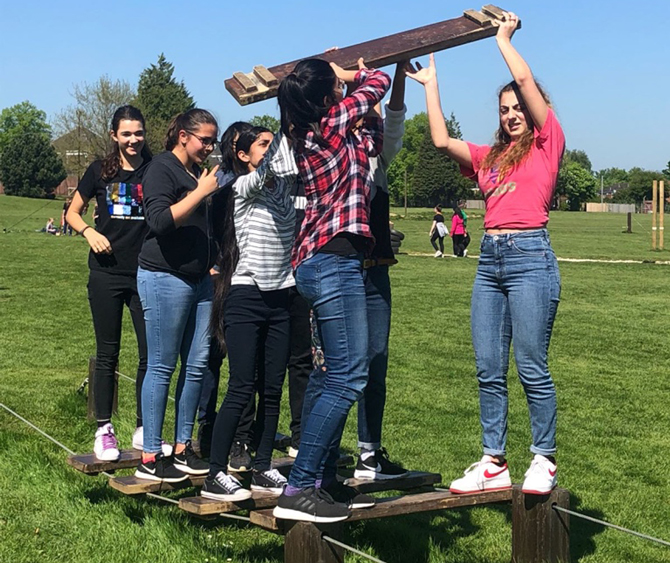
Program participants work together in an exercise mirroring the Group Challenge course at the Seeds of Peace Camp.
Want to learn more about our pilots and partnerships, or where the next one will be held? Interested in one in your region? Contact Kyle Gibson, our Deputy Director of Global Programs and Strategy, at kgibson@seedsofpeace.org.

Seeds of Change
Detroit Free Press

This Special Camp Brings Together Young People From Areas of Conflict to Become Ambassadors of Peace

BY JEFF GERRITT | Hate can be as addicting as crack, and almost as tough to kick. For the last 10 years, the Seeds of Peace camp in Otisfield, Maine, has served as a kind of drop-in detox center for young minds.

For teenagers coming from the blood-stained Middle East, the supply of hate is as pure as it gets and available on demand. As tensions have risen over the last two years, even pushing for peace has become uncool. Back home, some of these kids will be called sell-outs or traitors because they have made friends with someone from the other side. No longer will they feel at ease living in the black-and-white world of their friends, where Israelis are evil land-grabbers and Palestinians are rock-throwing terrorists.

“I feel lonely when I go back,” Osama Jamal, 16, a Palestinian refugee spending his third summer at the camp, told me. “I tell someone I have an Israeli friend and they say, ‘What, how can you?’ ”

At the Seeds of Peace camp, Jamal has eaten and slept next to Israelis, and he has gotten tight with a few of them. “Before I came here, I was closed-minded,” he said. “I thought Israelis were terrorists. They’re bad people. Here, I’ve had a chance to change.”

Since 1993, the nonprofit camp has brought together more than 2,000 teens from regions in turmoil worldwide. It combines sports and other outdoor activities with group discussions designed to get young people out of their own skins. “You see the human side of your so-called enemy and nothing looks the same again,” said Tamer Shabaneh, a 17-year-old Palestinian.

Journalist John Wallach, who died last month, founded the camp, starting with 40 Israeli, Palestinian and Egyptian teenagers. The Middle East remains the camp’s signature program, but Seeds of Peace now works with youths from 22 countries, including the United States. The young people usually are picked by the departments of education in their own countries. Black, white, Latino and Asian youths from nearby Portland have also gone through the three-week programs. Daily coexistence sessions give young people a chance to run down the issues, role play, confront each other and, most importantly, learn to trust and respect those who think differently.

The Free Press visited the camp on Wednesday, arriving on a corporate jet provided by a local Seeds of Peace board member; the newspaper shared the expenses.

In one session, nine Israeli and Palestinian teenagers debated Israeli settlements, whether it was an honor to die for your country, and media images of each other. Instead of shouting or shooting at each other, they spoke with an equal measure of passion and calm. And they listened—really listened.

The last time I heard Israelis and Palestinians talk about these issues was in October, when I spent a week in the West Bank and Israel. There, Israelis and Palestinians talk plenty about each other, but rarely with each other. That’s too bad, because both sides can make sense. When you see the daily indignities that nearly all Palestinians suffer in their own land—the security checkpoints, the curfews, the leveled homes and blocked streets in their neighborhoods—you feel their frustration. When you understand the daily random terror that Israelis face in the most ordinary places, you know why they feel under siege.

Seeds of Peace graduates returning to the Middle East are like former drug addicts going back to the streets. When the killing starts—and in the Middle East it never stops—the easy way out is to start hating and resort to stereotypes and easy answers.

Even in this wooded sanctuary overlooking Pleasant Lake, the conflict back home looms large and often sends campers jetting to the telephone. The teens heard the news last week when the Israeli government bombed a Gaza City neighborhood, killing a Hamas leader but also 14 other Palestinians. And they heard Wednesday, the day I spent at the camp, of the bombing that killed at least seven people at Hebrew University in Jerusalem.

Such incidents can cause some heated exchanges in camp, but for the most part the young people stay focused. They are realists who know there will be no peace in the Middle East until there is a just political settlement both sides can live with. And there will be no progress toward that peace as long as both sides have no trust. The teenagers I talked with were not necessarily optimistic about the chances for peace, at least in the short-term, but they remain hopeful and determined.

“The fact that I’m hearing what other people have to say is enough for me, personally,” said David Shoolman, a 17-year-old Israeli. “I’ll tell people that I have a Palestinian friend, and he’s a great person. That’s how I measure progress.”

Making a friend from the other side is a small victory that enables these teens to carry on. Life back home for these ambassadors of peace will not change soon, but at least they know that change is worth fighting for.

“I would not say I’m optimistic about peace, but I know how the world can be, and it makes me want to fight even harder for it,” said Netta Berg, a 16-year-old Israeli. “Whenever I see how bad things are, I think of here, this place, and I know what the future should look like.”

But by the time Berg gets home, Israel will probably have retaliated for the university bombing, which Hamas called revenge for the Israeli air strike on the Gaza Strip. Just as certainly, Hamas will retaliate for Israel’s retaliation.

And on it goes. The body bags fill up and hate becomes the drug of choice in the Middle East. A clocker waits on every corner. I can only hope that Berg and her classmates stay clean.

Camp Tries Teamwork to Ease Tension in Middle East
The New York Times

BY IRA BERKOW | OTISFIELD, MAINE Here in the piney woods of western Maine, where summer camps abound, a state trooper greets those who approach the shaded, green-gated entrance to one particular camp. “ID,” the officer says succinctly but politely. He checks visitors’ faces against their photos, checks their names against the visitors list.

A half dozen very tall men were checked at the gate today and Tuesday and quickly passed through. Four of them play in the National Basketball Association: Antawn Jamison and Mike Dunleavy of the Golden State Warriors, Brent Barry of the Seattle SuperSonics and Carlos Boozer of the Cleveland Cavaliers. Joining them were B. J. Armstrong, a former N.B.A. player, who is now assistant to the general manager of the Chicago Bulls, and Don Casey, who once coached the Nets.

They came to give a basketball clinic at this unlikely camp, which is called Seeds of Peace. They were brought by their agent, Arn Tellem, who is a camp benefactor.

Living, playing, talking and even sleeping side by side in the camp’s wood cabins are Israeli and Palestinian and other Muslim youngsters ages 13 to 17. Most of the 160 campers are from Middle Eastern countries, though some come from other nations and from the United States. The teenagers know firsthand about the need for security because many of them have experienced the bombings and bloodshed in Israel and the West Bank, and they are victims of the conflict.

Today in the cafeteria at Hebrew University in Jerusalem, there was yet another bombing, killing at least 7 and injuring more than 80.

Far from Jerusalem, the boys and girls attend the camp, in two three-week sessions, because their governments perceive them to be potential leaders. (Of course, the hostilities are never far from their thoughts. The news of today’s explosion brought tears and wailing in pockets of the camp.) If you get to know the person living next door, the concept here maintains, you might not fear or hate that person, and might even get to like and understand and seek to coexist peacefully with him or her.

“Sports are an important part of this camp,” Tellem said. “Teams are made up of people from different regions, so they become teammates instead of adversaries. And basketball has become very popular all around the world. I wanted to bring a mixture of black and white players, so that the campers could see how people from different races and backgrounds can come together and succeed in a group setting.”

Armstrong, in a baseball cap at midcourt, led the basketball clinic as campers, all in green camp shirts as if on the same team, circled him excitedly. Fahed Zoumot, a 17-year-old from Jordan, who says he spends four hours a day playing basketball, was thrilled to meet Armstrong, who played on several teams, including the Bulls.

When a friend, an Israeli girl, asked who Armstrong was, Fahed was taken aback. “It’s B. J. Armstrong,” he said in English. “Come on!”

“O.K.,” Armstrong said to the youngsters, “we’ll start with passing.” Which, perhaps unwittingly, demonstrated a sense of brotherhood, of giving something up for the sake of a greater good.

There was a lot to learn, and not all of the campers were adept. When Armstrong said to dribble left-handed, stop and pass, some dribbled right-handed, did not stop and shoveled the ball to their partners. Armstrong had Barry demonstrate a bounce pass.

“I don’t know if Brent passes during the game,” said Armstrong, proving also that one can gently needle a teammate. Barry simply smiled.

The three-person full-court weave, with boys and girls, Israelis and Arabs, mixed together, turned into a happy form of chaos.

“Well,” Jamison said gently, “there is a willingness to learn.”

Watching from under one basket was Aaron Miller, a senior adviser on Middle Eastern affairs to Secretary of State Colin L. Powell and friend of the camp’s founder, John Wallach. The camp, Miller said, is a place “where generational attitudes can change, where your adversary has a human face.”

“He’s no longer a stereotype,” Miller added, “and you get glimpses of what could be.”

Wallach, who was a journalist and wrote books about the Middle East, started the camp 10 years ago. He received money from private sources, as well as from corporations and the State Department.

Wallach died of lung cancer two weeks ago at the age of 59, but his supporters plan to continue the camp.

“It’s a long-term project,” said Jethro Berkman, who has been a counselor for the last five years. “And 10, 20 years down the road, these kids could be the leaders of their people.”

Some Israelis and Palestinians said that on their first night at camp, they had trouble sleeping because their “enemy” was in the next bed.

“I heard that,” said Dara Dajani, a 15-year-old Muslim from Jerusalem. “But it didn’t happen for me. I traveled here for about 20 hours. I was dead tired. Went right to sleep.”

Her bunkmate and friend – they have been together for two weeks so far – is Hen Sutil, an Israeli Jew from Haifa. Hen said she understood that some teenagers who have returned to their homelands from the camp have been accused of being traitors for coexisting with people who are ordinarily viewed as enemies. “We’re traitors,” she said. “That’s stupid.”

Dara said, “If anyone thinks we’re traitors, they don’t want peace.” Before she came to the camp, Dara said, she thought “all Israelis were bad.”

“But now I understand the Arabic saying, ‘All the birds are like each other,’ ” she said. It is an epigram. “It means that in fact there are many different kinds of birds,” Dara said.

As part of the dialogue, the camp has what are called coexistence sessions. There can be heated exchanges of grievances, with youngsters taking strong positions about the conflict back home.

“I thought all Palestinians were bad, like Dara thought about us,” Hen said. “But I’ve turned 180 degrees. I just didn’t know any Palestinians. But in the coexistence sessions I’ve heard them argue and then say: `Did I hurt your feelings? I’m sorry.’ And they meant it. It was so sweet, so nice.”

Hen talked of living in a land where suicide bombers are a constant threat, of how she stays home more now than she ever did before.

Dara said: “We get scared, too. Our car never gets near a bus.”

Hen’s eyes widened. “Really!” she said.

Both Dara and Hen think that the Palestinians and the Israelis can live side by side in separate states. And for those Palestinians who believe Israel should not exist at all?

“They’d have to get over it,” Dara said.

There is Mideast Peace in the Wilds of Maine
The Washington Post

At Camp, Arab and Israeli Teens Trade Hugs and Poems

BY CARLYLE MURPHY | OTISFIELD, MAINE After two suicide bombers blew up a Jerusalem market last month, killing 16 people, the epicenter of Middle East strife plunged anew into an inferno of mutilated bodies, demolished homes, closed borders, curses and recriminations. But here in the woods of southern Maine, something quite different happened after news of the bombing reached a camp of Arab and Israeli teenagers.

The attack drew tears, apologies, hugs and condolences. It moved a 14-year-old Egyptian to pen a poem, “Hurricane and the Dream.” It led a 15-year-old Israeli to compose a song called “Pain.” And Dan Moskona, an Israeli of “14 and a half” years, saw something he’d never even imagined.

“I saw a couple of Palestinians just sit, hug and cry about the bomb attack,” he said last week. “I couldn’t believe it. Palestinians crying about a bomb attack in Jerusalem?”

Afterward, when Arab friends came and said they were sorry, “I said, ‘Why do you say you’re sorry? You’re not the ones who did it.’ ”

If the future can arrive at one place on Earth and later migrate to another part of the world, this pine-scented camp on the shore of Pleasant Lake may hold hope for the tormented Holy Land. It is the site of “Seeds of Peace,” a program that brings together Arab and Israeli teenagers for a month of fun and serious discussions.

This summer, 165 teenagers from six nations—Israel, Egypt, Jordan, Tunisia, Morocco and Qatar—and Palestine, which is struggling to become one, gathered to talk about how they can live together despite their differences. Next Wednesday, they will travel to Washington, where they hope to visit the White House.

Founded by former Hearst foreign editor John Wallach, the camp is in its fifth year. Participants are nominated by their schools after writing an essay on making peace, with finalists chosen by their respective governments.

Since the campers must have a working knowledge of English, most come from middle-class backgrounds and they include a sprinkling of kids well—connected to top politicians.

Aside from swimming and other summer camp activities, the heart of “Seeds of Peace” is a daily, 90-minute discussion known in camp as “coexistence.” Led by professionals trained in group therapy and conflict resolution, the sessions explore such topics as the dynamics of identity, the art of listening, the meaning of such words as “stereotype” and “prejudice” and, sometimes, the redemptive powers of tolerance and compassion.

But many of the sessions center on fear. Israeli teenagers tell of being afraid that someone, anyone, standing next to them might be a suicide bomber. They talk a lot about the Holocaust, which many of their co-campers know little about because it is not taught in most Arab schools.

Palestinians describe being under curfew and not attending school for weeks, watching gun-toting Israeli soldiers in their streets, enduring humiliating roadblocks, seeing their homes bulldozed and, much worse, losing an uncle, brother or father to an Israeli bullet.

Arguments follow—about whether Israelis use rubber or metal bullets; about whether Israelis are “giving” or “returning” land to the Palestinians. The sessions, the teenagers say, are tense, heated and frequently tearful.

“It’s really hard,” said Israeli Diana Naor, 13, who lives in Holon, outside Tel Aviv. “Everyone is shouting and crying.”

“The whole point of it is to let people recognize that the differences are wide, that they are deep, but that it’s up to them to find a way to resolve it,” said Wallach. These children “are the future, and they can’t be mired in the same cycle of violence that their parents and grandparents are mired in.”

Wallach has seen “much more hatred that I ever anticipated in a 13-year-old, a 14-year-old, because their society has already poisoned them … What we’re doing is a detoxification program. We’re trying to get the poison and hatred out of them. In some cases we succeed and in some cases we don’t.”

Seeds of Peace takes no government money, and Wallach said he raises $750,000 each year from individuals and corporations to run it.

Sara Jabari, a 15-year-old Palestinian, said her father, a gas station owner in Hebron, was warned by Hamas, the extremist Palestinian group responsible for the suicide bombings, not to send her to the peace camp. He ignored the warning “because he believes in peace,” Jabari said. But just in case, on the day of her departure, her family left for the airport three hours earlier than planned.

Jabari said she was wary of the Israeli campers at first. “I thought all the Israelis were like the [Israeli] settlers, and the settlers were always killing our people.”

Then she met Dana Naor. “She is my friend. She is so nice and I know [among] the Israelis there is good and there is bad from them. And from the Palestinians, there is good and there is bad too. I really had a new idea of the Israelis from Dana.”

Naor arrived with different apprehensions about Palestinians. “I knew the most extremist would not come to this kind of camp, but I was kind of worried that they won’t be nice or they won’t speak English or that they won’t want to be our friends,” she said. “But all of them are really, really nice.”

It was definitely not love at first sight between Adham Rishmawi, son of a Palestinian medical supplier in Beit Sahour, near Bethlehem, and Edi Shpitz, son of an Israeli airplane engineer in Holon. The two 15-year-olds first spotted each other in the Frankfurt airport en route to Maine.

“When I saw Adham … he had a Palestinian hat and a Palestinian flag [on his chest]. And he looked at me in a strange way, and I looked at him in a strange way and didn’t say anything,” Shpitz said. “But then when we found out we were in the same bunk it was like, ‘Oh, no!’ and we started talking and after the first couple of coexistence [sessions] we understood that each of us has his problems and I understand Adham and his people because he has a right to get a country. But he has to understand us: We waited 2,000 years for that moment.”

Rishmawi, who said he has never had a personal relationship with an Israeli his own age, discovered when he talked to Shpitz that “he is not against Palestinians. It was a great feeling.”

At home, the boys live less than a two-hour drive apart. “But it’s actually a very big distance” from Holon to the “Palestinian Authority,” Shpitz said.

Rishmawi leaned over and whispered in Shpitz’s ear. “He’s telling me he lives in Palestine, not the Palestinian Authority,” explained Shpitz, who laughed and corrected himself.

The day of the July 30 bombing, “we had just finished breakfast and they brought us all into the big hall,” said Saad Shakshir, 14, a Jordanian. “John announced it and there was a lot of sadness and crying. It wasn’t just Israelis who were crying. A lot of Arabs and Palestinians were also crying.”

“We told them we don’t agree to put bombs,” said 15-year-old Mohammed Sager, one of the 10 Palestinians from Gaza at the camp.

The long-term goal of Seeds of Peace is to nurture leadership. So each year about 30 campers are invited back as program leaders, junior counselors and eventually counselors. Some have returned three consecutive years. Coexistence sessions among these older teens are sometimes more acrimonious, and more mature, group leaders said.

“They’re able to talk fairly intimately and deeply” about trust, said Achim Nowak, who runs a coexistence program at the camp with Roya Fahmy-Swartz, a Tokoma Park resident.

Before the recent bombing, the teenagers “were very comfortable with the intellectual arguments and discussions and ‘my history’ and ‘your history,’” said Fahmy-Swartz. But that day “pushed them to anther level of being able to see each other as people rather than as history [or] politics. They started talking about feelings rather than ‘My Torah says,’ ‘My Koran says’ … They’re supreme debaters.”

By this summer’s end, the camp’s alumni will number about 800. Just a drop in the bucket, a cynic might note.

“You have to start somewhere, right?” Wallach said. “I mean, you know, one of these kids could become a president or a prime minister.”

US Seeds visit Middle East, experience Israeli-Palestinian conflict first-hand

14 American Seeds meet with Palestinian, Israeli peers on Bayti trip

JERUSALEM | For many American Seeds, dialogue sessions at Camp in Maine are the first exposure to the lives of Israelis and Palestinians behind the news headlines. Fourteen of these Seeds were able to further deepen their understanding of the region and its complexities through “Bayti”, a Seeds of Peace educational trip in Israel and the occupied Palestinian territories.

Packed into the two-week trip in July were visits to major cities in Israel and in the West Bank, and a series of meetings exposing them to issues and experiences they wouldn’t otherwise have access to as tourists.

Highlights of the trip included a multiple-narrative tour of the Old City of Jerusalem; meetings with Graduate Seeds involved in women’s rights, immigration policy, businesses, and community youth organizations; a tour of the Knesset and meetings with elected members from different political parties; a visit to Palestinian refugee camps near Hebron and in Jenin, and a trip to the southern Israeli city of Sderot, on the border with Gaza.

Through conversations with Graduate Seeds active in public life, politicians, activists, and other youth, the Seeds came to understand the complexities and nuances of conflict both within and between Israeli and Palestinian communities.

“We saw raw, untainted human experience,” said Hayley, a 2011 Seed who was on the trip. “We saw things that can’t be described in dialogue. The people we spoke to painted a very three dimensional picture of life there; I feel like I now understand the psychological impacts of living in the region.”

Seeds also spent time in Haifa and its Baha’i Gardens; Bethlehem and the Church of the Nativity; old city Jaffa; Jericho and the Dead Sea; Ramallah; Nabi Saleh, the site of weekly protests against settlement expansion; and Neve Shalom/Wahat Salaam, a cooperative intentional community of Jewish and Palestinian Arab citizens of Israel located outside Jerusalem.

Central to Bayti were daily debrief sessions in which the Seeds and their trip leaders discussed their thoughts and feelings about everything they were experiencing. These served as spaces for intentional thinking and processing of what the Seeds saw, heard, and felt as they moved through a challenging and intense region. The Seeds were also able to meet with their friends from Camp and experience the Muslim holy month of Ramadan.

This was the third and largest edition of Bayti, a term which means ‘my home’ in both Arabic and Hebrew.
 
2013 BAYTI PHOTOS

Aides Disavow Mrs. Clinton on Mideast
The New York Times

WASHINGTON | White House aides today disowned comments by Hillary Rodham Clinton about the need for a Palestinian state and insisted that she was speaking only for herself.

Mrs. Clinton’s remark came when she told a group of Arab and Israeli teen-agers that creating a state of Palestine was “very important for the broader goal of peace in the Middle East.”

With that statement, which was made in answer to a question, Mrs. Clinton stepped into a foreign policy minefield that American policymakers have always shied away from. The United States has never endorsed creating a Palestinian state, although President Carter set off a controversy in 1977 by calling for a Palestinian “homeland.”

White House officials today restated the Administration’s position, which is to say nothing that would appear to prejudge the outcome of the so-called final-status talks between the Israelis and Palestinians. “That view expressed personally by the First Lady is not the view of the President,” said Michael D. McCurry, the White House press secretary.

Peppered with questions about Mrs. Clinton’s comments and her role in foreign policy, Mr. McCurry said later, “I expect that she will always continue to express her views, but I doubt that she will venturing into the Middle East peace process anytime soon.” Mr. Clinton, in hastily prepared remarks about the Middle East, did not refer to Mrs. Clinton’s statements, but he emphasized that the United States was not trying to dictate how the negotiations would be resolved.

American Jewish groups reacted with alarm to Mrs. Clinton’s remarks.

“The timing couldn’t have been worse,” said David Harris, executive director of the American Jewish Committee. “If Israelis conclude that Hillary Clinton is a stalking horse for the Administration, in sort of testing the waters on this issue, then it’s going to undermine their confidence in the American role.” Despite the White House disavowals, some leading Jews wondered whether Mrs. Clinton was voicing the private beliefs of her husband.

Among Arab-Americans, the comments also caused a stir, although of a different nature. Hala Maksoud, the president of the American Arab Anti-Discrimination Committee, said: “We have been waiting for such a signal from any American Administration for a very long time. It’s a recognition of the fact that the Palestinian people should be treated like any other people in the world, and that they should not be denied a basic human right.”

She called the Administration’s disavowals “understandable under the present political situation,” but added, “It’s still very heartening that she should have said so in the first place.”

The reaction in Israel was muted today. Mrs. Clinton’s comments were reported in newscasts, but did not receive prominent play.

It is not clear that Mrs. Clinton knew that she was breaking with official policy. Soon after she made her comments, her office issued a statement in response to reporters’ inquiries that said: “These remarks are her own personal view. The Administration’s position on this matter has not changed.”

Mrs. Clinton was speaking via satellite with Arab and Israeli teen-agers holding a meeting in Villars, Switzerland, as part of a program called Seeds for Peace that is intended to teach peaceful coexistence. She first mentioned a Palestinian state in passing, in responding to the kind of question she loves, about whether Palestinian women should take part in political leadership.

“I would hope that women in the Palestine state, just as throughout the Middle East, would be given the opportunity to demonstrate their talents and make their contributions,” Mrs. Clinton said in part.

One of the students, alert to the explosive areas of the Middle East peace negotiations, later asked Mrs. Clinton what consequences there might be “for your declaration a few minutes ago of Palestine” given that “right now this country does not exist.”

Mrs. Clinton replied: “Well, I think that it will be in the long-term interests of the Middle East for Palestine to be a state and for it to be a state that is responsible for its citizens’ well-being, a state that has responsibility for providing education and health care and economic opportunity to its citizens, a state that has to accept the responsibility of governing.”

Mrs. Clinton said such a state was important not only for the Palestinians, but also for peace in the Middle East.

She then added that the territory the Palestinians “currently inhabit” along with whatever land they gain through peace negotiations, should “evolve into a functioning modern state that is responsible for the well-being of its people and is seen on the same footing as any other state in terms of dealing responsibly with all of the issues that state governments must deal with.”

Read James Bennet’s article in The New York Times »