
Just before the academic year starts, Arab and Jewish kids have a joint jamboree at Jerusalem’s YMCA
By Jessica Steinberg
More than 400 Arab and Jewish school-age children and their parents showed up at the YMCA Monday to celebrate coexistence and the start of a new school year.
Kids jumped in a bouncy castle, had their faces painted with letters of the alphabet, and watched a magic show in the afternoon festival held in the grassy front courtyard of central Jerusalem’s YMCA.
The gathering was organized by the YMCA together with local synagogue Kehillat Zion and interfaith youth movement Kids4Peace and sponsored by the Jerusalem Foundation.
“It’s about normalizing the beginning of the school year,” said Dasee Berkowitz, the educational coordinator at Kehillat Zion. “We’re coming together around what we have in common.”
The rounded letters of Arabic were easier to twist into shapes by the balloon sculptor than those of Hebrew or English, Berkowitz noted.
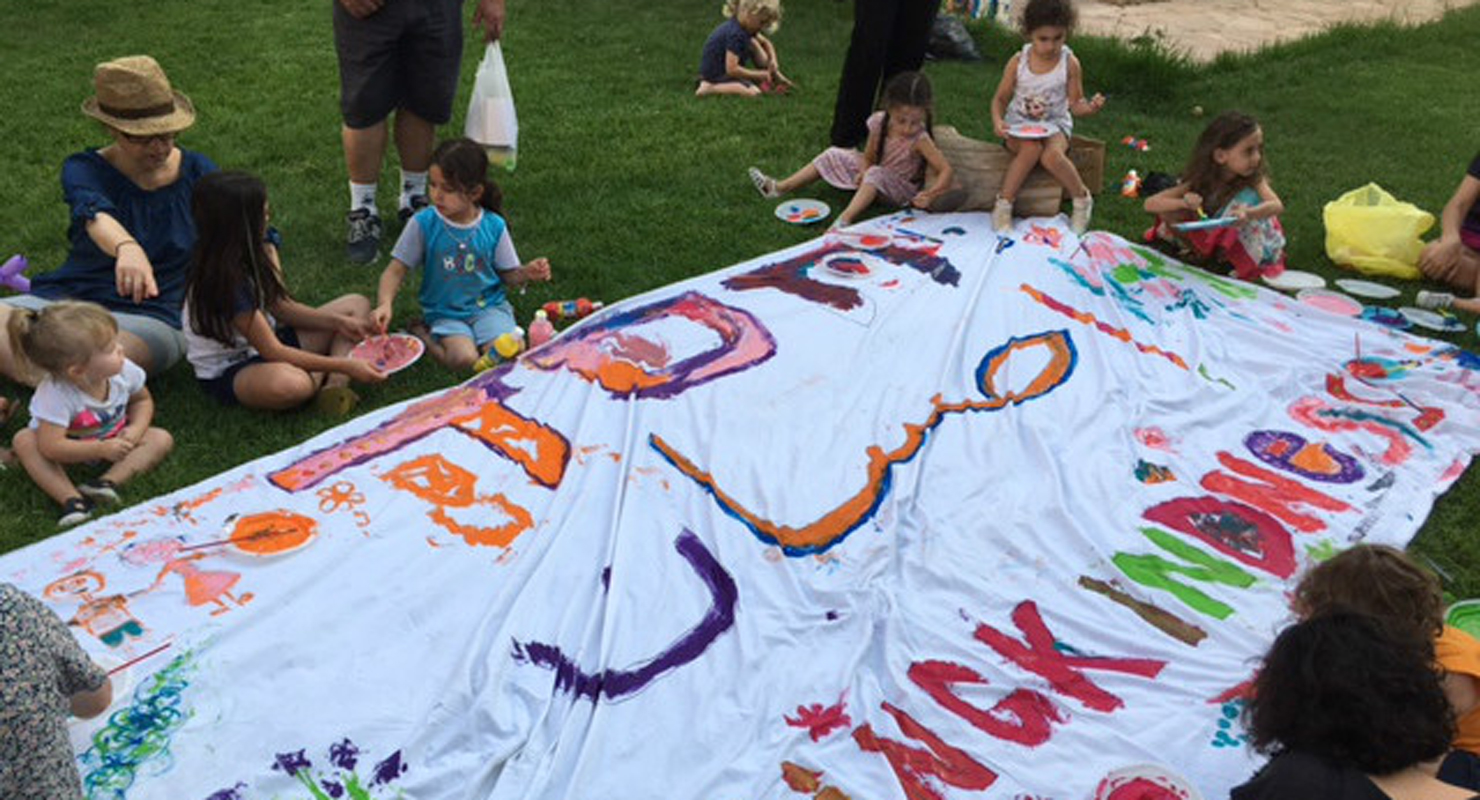
Another corner of activity was devoted to using new school markers to write blessings for one another and create a huge banner painted with the term “loving kindness” in three languages, English, Hebrew and Arabic.
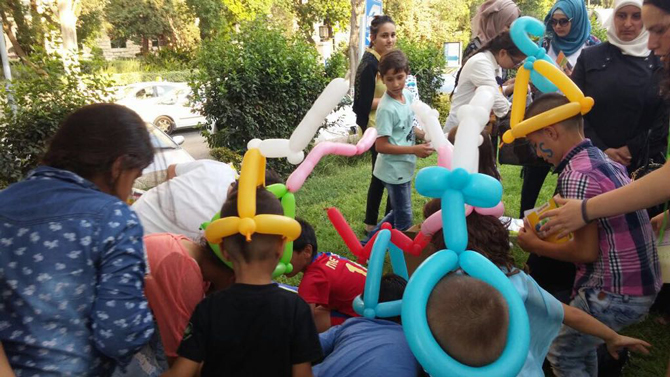
Shaping balloon letters in Arabic, Hebrew and English at a back-to-school celebration (Courtesy Dasee Berkowitz)
“We hung it up at the YMCA, facing King David Street, but we’ll take it down and bring it to Kehillat Zion, where we’ll turn it into a cover for our Torah,” said Berkowitz. “It will become the synagogue’s prayer shawl.”
Reflecting on the afternoon’s mingling of the city’s various communities, she said, “There was the sense that this kind of gathering can be normal.”
Arab and Jewish counselors from Kids4Peace took charge of the art activities, working closely with teens from Kehillat Zion’s youth group, Zion-NOAM, a branch of the Masorti Movement’s youth organization.
“They talked about what hesed [loving kindness] means to them,” said Berkowitz. “It was a nice added component.”
Kehillat Zion’s Masorti rabbi, Tamar Elad-Appelbaum, has said that part of her synagogue’s mission is to find a way to help unify the city’s different streams, and the institution has committed itself to holding coexistence events annually on Hannukah and Jerusalem Day.
The congregation, known for its soulful, spirited singing, regularly leads Friday night Kabbalat Shabbat services during the summer season at the city’s First Station complex, where it has also organized evening services of prayers and songs for peace as part of local coexistence events.

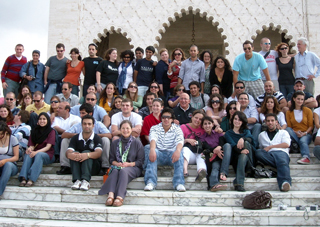 During four intensive days of workshops, seminars and discussions, over 50 Afghan, American, Egyptian, Indian, Israeli, Jordanian, Pakistani and Palestinian Seeds created a mission statement and discussed a number of service projects graduate Seeds hope to carry out either in their own communities, or in cooperation with Seeds from other countries.
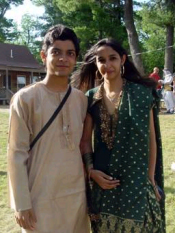 Since 2001, in partnership with the U.S Department of State, Seeds of Peace has been bringing together young Indians and Pakistanis for one-of-a-kind conflict resolution programming—at the Seeds of Peace Camp in Maine and in Lahore and Mumbai. Seeds of Peace is the only nonprofit organization in the world doing this kind of programming.
 Twenty-four Palestinian educators from Tulkarem, Jenin, Hebron, Walla Jay and Jerusalem participated in a Seeds of Peace workshop aimed at equipping them with skills to create peaceful learning environments.
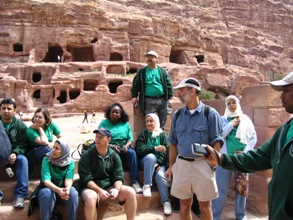 The event took place at the Notre Dame Hotel in Jerusalem in partnership with Friends of the Earth-Middle East (FoEME). Presenters sketched a bleak picture of the water situation in the region: there is not enough water to meet increasing demand; the water that exists is increasingly polluted; and water resources are distributed with radical inequality. They then described real and dangerous challenges that can only be solved through joint action. Israelis, Palestinians and Jordanians should cooperate-not because of an abstract longing for peace, but because of immediate, tangible, positive improvements.