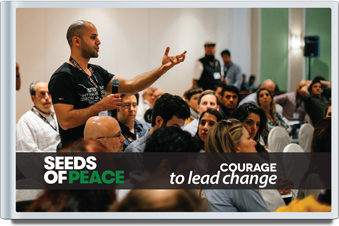


Seeds of Peace
Founded in 1993 by journalist John Wallach, Seeds of Peace is dedicated to empowering young leaders from regions of conflict with the leadership skills required to advance reconciliation and coexistence.
Over the last 18 years, Seeds of Peace has intensified its impact, dramatically increasing the number of participants, represented nations and programs.
From 46 Israeli, Palestinian and Egyptian teenagers in 1993, the organization has expanded its programming to include young leaders from South Asia, Cyprus and the Balkans. Its leadership network now encompasses over 4,300 young people. Currently, the organization is actively working in the Middle East and South Asia.
Seeds of Peace's internationally-recognized program begins at its summer Camp in Maine and continues through year-round regional initiatives. These include ongoing dialogue meetings, conferences, workshops, educational and professional opportunities, and an adult educators program. This sustained engagement allows participants to develop lasting empathy, respect, and confidence, and equips them with the communication and negotiation skills necessary to advance peace.
Seeds of Peace: An international model for conflict resolution
Due to its proven impact and success in the Middle East, Seeds of Peace has earned international recognition as an effective model for resolving conflict worldwide. Since its inception, Seeds of Peace has expanded to other areas of historic conflict, including Cyprus and the Balkans.

The US State Department recognized the effectiveness of this unique model and in 2001, with its support, Seeds of Peace launched its South Asia program with Indian and Pakistani youth. One year later, Seeds of Peace expanded by welcoming an Afghan delegation to the Camp in Maine.
Seeds of Peace also runs a domestic program for young leaders from Maine to address ethnic and racial tensions between the diverse communities that have settled in the Camp's home state. And in 2004, Seeds of Peace launched an initiative called "Beyond Borders," which brings teens from additional Middle East countries including Iraq, Saudi Arabia, and Kuwait, to participate in a cultural exchange program between American and Arab youth.
›› Learn more about our current programs.
ShareThis